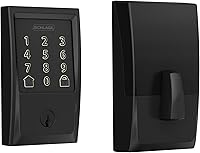
Will a Yale Assure Lock Fit Your Andersen Patio Door?
A Yale Assure lock will fit an Andersen patio door only when the door's series, lock cutout, thickness and hardware match the Yale model. Measure first, because many patio doors use sliding or multipoint hardware instead of a standard deadbolt.
On this page (9 sections)
- What decides whether a Yale Assure lock fits Andersen patio doors?
- Are Andersen hinged patio doors easier to fit?
- Do sliding Andersen patio doors accept Yale Assure locks?
- Can an accessory make an incompatible lock work?
- What smart lock is a useful comparison?
- Does a doorbell transformer affect Yale Assure compatibility?
- How should you check an Andersen patio door before ordering?
- Should you rekey or replace the patio-door lock?
- Final answer: will Yale Assure fit your Andersen door?
A Yale Assure lock may fit an Andersen patio door only when the door series and existing lock hardware match the Yale model's mounting requirements. Do not choose by brand name alone.
Andersen patio doors can use different latch, handle, strike and multipoint arrangements, while many smart locks are built around standard deadbolt dimensions.
Start by identifying the exact Andersen patio door series. Then compare the current lock opening, door thickness, backset, strike position and handle layout with the Yale Assure model you plan to use.
This matters most for homeowners who assume a front entry lock will transfer cleanly to a patio door. A patio panel often has a narrower stile, a different edge profile and a lock case shaped for a handle driven mechanism rather than a simple thumb turn.
It also matters for renters or buyers who want to avoid drilling a new opening. Once a bore or mortise cut is made in the wrong place, the panel may not accept the next lock you try.
Anyone with a sliding panel, a door with rods running along the edge, or a tall pull handle should treat compatibility as unproven until the mechanism is identified.
Measure with the door closed and again with the existing lock in place. Note the distance from the edge to the center of the bore, the thickness of the stile at that height and the height of the strike above the floor.
Photograph the interior side, the exterior side and the edge of the door before you remove anything. Photos help when you compare a product page, because product images rarely show the exact case shape used on a patio panel.
Check how the handle moves the lock and note clearance around the planned lock body. Interior trim, a sliding screen track, blinds or a handle plate can block a smart lock body even when the bore size looks correct.
If you are still comparing smart access options, our guide to smart door locks explains the main lock styles, connection methods and installation questions.
What decides whether a Yale Assure lock fits Andersen patio doors?
The main decision is the existing lock mechanism, not the door's brand. A Yale Assure model designed for a standard deadbolt may not replace a narrow patio-door latch, mortise lock or multipoint system.
Check these details before you buy:
- Andersen patio door series and model
- Hinged or sliding door design
- Door thickness
- Backset from the door edge to the lock center
- Bore or lock cutout shape
- Edge bore size
- Strike plate position
- Handle and thumb-turn clearance
- Single-point or multipoint locking
- Interior and exterior space around the hardware
A lock can have the right electronic features and still fail to fit if the bolt does not reach the strike or the interior body hits the glass, handle or frame.
Yale Assure lock for Andersen patio doors: which measurements matter?
The most important measurements are door thickness, backset, lock opening and strike alignment. Record them before removing the existing hardware so you have a reference for the original installation.
Measure the door thickness at the lock. Measure the backset from the door edge to the center of the bore or lock opening.
If the door uses a mortise pocket or a narrow latch case, photograph the opening and note its shape and depth.
Next, inspect the strike on the frame. A replacement lock needs the bolt or latch to enter the strike cleanly without forcing the door.
Patio doors can shift slightly with seasonal movement, so alignment matters as much as the lock body's dimensions.
Are Andersen hinged patio doors easier to fit?
Hinged Andersen patio doors may be easier to match than sliding doors, but the existing hardware still controls compatibility. Some hinged doors use a conventional latch and deadbolt pattern, while others use multipoint locks with several locking points.
A standard deadbolt replacement is most likely to work when the door already has a compatible deadbolt opening, enough interior clearance and a strike placed for the new bolt. A Yale Assure lock should not be treated as a universal replacement for every Andersen handle set.
If the door has a tall handle with several locking points, replacing only one part may leave the other points unchanged or unusable. Keep the existing hardware installed until you confirm the Yale model can replace the complete mechanism you need to change.
For doors with two active panels or unusual handle layouts, our guide to a keypad door lock for double doors covers the clearance and alignment questions that also matter here.
Do sliding Andersen patio doors accept Yale Assure locks?
Sliding Andersen patio doors often need a sliding-door-specific lock or retrofit, not a standard deadbolt. The moving panel, narrow stile, latch hook and frame strike create different requirements from a hinged entry door.
Check whether your door uses a mortise-style patio lock, hook bolt, latch assembly or separate handle lock. Measure the lock case and the distance between the handle, glass and door edge.
A smart lock designed for a conventional deadbolt may have no suitable place to mount.
If your door is a sliding glass design, read our guide on choosing a smart lock for sliding glass doors. It focuses on the mechanism and installation limits that determine fit.
What if the Andersen lock uses multipoint hardware?
A multipoint Andersen lock needs a compatible multipoint replacement or a different access method. The handle may operate several bolts at once, so installing a single smart deadbolt could remove or bypass part of the original security function.
Look for the lock case, faceplate, rods and strike points along the door edge. Count how many points engage when you turn the handle.
If the system has several bolts, compare the complete replacement hardware rather than checking only the top lock opening.
Do not drill new holes until you know where the internal rods and glass sit. Patio door panels have limited room, and an incorrectly placed opening can damage the door or prevent the handle from operating.
Can an accessory make an incompatible lock work?
An accessory can add connectivity to a compatible lock, but it cannot correct the wrong lock body, bore size or patio-door mechanism. Confirm the physical installation first, then choose a bridge or hub if the lock needs one.
The August Home Connect Wi-Fi Bridge is an accessory for an August Smart Lock. It uses Wi-Fi and Bluetooth, requires a North American 110-240 volt outlet and works with iOS 9.0 or higher or Android 5.0 or higher smartphones.
Its role is remote access and connected control. It does not replace an Andersen patio-door latch, change a deadbolt backset or make a Yale Assure model fit a lock opening that does not match.
In daily use, the bridge sits plugged in near the lock and gives an August lock a path to your home network, so an app command can reach it when you are away.
That only helps after the lock itself is already mounted correctly on a compatible door. A bridge cannot narrow a wide bore, deepen a shallow latch case or move rods inside a multipoint system.
Placement matters for reliable use. The bridge needs a suitable outlet within range of both the lock and your router, and it should not be tucked behind furniture or in a spot where heat builds up.
Keep the outlet choice practical rather than hidden. You will want to see its indicator lights during set up, and you may need to reach it again if your router or password changes.
Bluetooth and Wi-Fi play different roles here. Bluetooth helps during nearby set up and phone pairing, while Wi-Fi is what allows remote commands and alerts from outside the home.
Voice control is another benefit when the set up suits your household. It can be handy for guests or for quick checks, but it adds a further layer of permission and routine decisions to manage.
Care is mostly a matter of leaving the bridge undisturbed. Once it is paired, avoid moving it to another outlet without planning to reconnect the lock in the app.
For another connected-lock setup, see how to connect Schlage Connect to Wi-Fi through a hub. That guide helps separate the physical lock decision from the networking decision.
What smart lock is a useful comparison?
A standard smart deadbolt is a useful comparison when your Andersen door already has matching deadbolt dimensions and a compatible strike. It is not a safe assumption for a sliding door or multipoint patio lock.
The Schlage Encode Smart WiFi Deadbolt Lock uses built-in Wi-Fi, supports up to 100 access codes and works with the Schlage Home app. It also supports Alexa and Google Home when paired with the app and a voice-enabled device.
It is battery-operated with four AA batteries and includes one physical backup key. Its stated door range and backset make it a clear example of why measurements matter: those dimensions describe a standard deadbolt installation, not every Andersen patio-door configuration.
Choose a lock in this class only after confirming that your door already uses the same basic mechanism. If you need help with access codes, app control or connectivity, compare those features separately from the physical fit.
For a connectivity option, see Yale smart locks with Matter support.
Does a doorbell transformer affect Yale Assure compatibility?
A doorbell transformer does not determine whether a Yale Assure lock fits. The transformer belongs to a wired doorbell circuit, while the smart lock depends on its own mounting, power and connection requirements.
The Hardwired Transformer for Ring Wired Video Doorbells is made for compatible Ring wired doorbells, including Video Doorbell Wired, Wired Doorbell Plus and Wired Doorbell Pro models. It replaces older or underpowered doorbell transformers and measures 2.34 x 2.55 x 1.92 in.
It is not a lock adapter and does not power a Yale Assure installation. Keep the doorbell wiring question separate from the patio-door lock question.
Its input is 120V AC 60 Hz and its output is 16V 30VA. Those figures matter only inside the wired doorbell circuit, where a weak transformer can leave a video doorbell short of power.
Think of the split this way. The lock question turns on mounting, bolt throw, handle clearance and strike position.
The doorbell question turns on voltage, transformer capacity and the condition of the existing low voltage wiring.
An underpowered doorbell transformer will not make a smart lock fit better. It also will not make a compatible lock fail to mount, because the lock has its own power and connection needs.
During set up, a transformer belongs in the doorbell wiring area, often near a panel or junction box, and it should be installed with power off and with care around wiring. It is not a plug in accessory you move around by the door.
It suits homeowners whose wired doorbell circuit is already in place and whose doorbell behavior points to a power problem. It does not suit someone trying to solve patio door hardware.
If both projects are happening at the same home, list them as two separate jobs. Measure the patio door for the lock, and check the doorbell circuit for the transformer, without mixing the parts or the wiring.
How should you check an Andersen patio door before ordering?
The safest approach is to identify, measure and compare before removing the current hardware. Use this order:
- Find the Andersen patio door series and configuration.
- Decide whether the panel is hinged or sliding.
- Photograph the existing interior and exterior hardware.
- Measure door thickness and backset.
- Measure the lock opening, edge bore and strike.
- Check for multipoint rods or extra locking points.
- Confirm handle, glass and frame clearance.
- Compare every measurement with the exact Yale Assure model.
- Check whether the Yale model replaces the whole mechanism or only a deadbolt.
- Keep the original hardware until the fit is confirmed.
If the door uses a rare lock case or multipoint system, ask a qualified locksmith or Andersen service contact to identify the replacement hardware before drilling or modifying the panel.
For locks exposed to rain, dust or coastal air, a best keypad door lock cover guide can help you think through weather protection after the hardware fit is solved.
Should you rekey or replace the patio-door lock?
Rekeying is useful when the existing lock fits and you only need a new key arrangement, while a smart-lock replacement makes sense when the hardware and door measurements are compatible. Neither option fixes a mismatched lock case or sliding-door mechanism.
If you are keeping a compatible mechanical lock, read how to rekey a smart lock before choosing between a key change and a full replacement. If you are comparing wireless standards, our guide to Schlage Encode Plus Thread explains how connection protocols differ from physical lock fit.
Start with the problem you are trying to solve. Rekeying changes which key operates the existing cylinder, so it suits a move, a lost key, a tenant change or a desire to retire an old key without changing the lock body.
A smart lock replacement changes how you enter and how you can manage access. It can add codes, app control or voice control, but only if the door accepts the new lock body and the bolt aligns with the strike.
Keep the existing hardware until you know which path you are taking. Removing a patio lock case early can make it harder to test alignment or to return to the original set up if the new lock does not fit.
For a rekey, ask who will hold the new keys and how they will be recorded. A simple key schedule at the start prevents confusion later, especially in a household with more than one user.
For a replacement, confirm the full set of measurements again before ordering. Door thickness, backset, bore or cutout shape, edge details and strike position all need to line up with the exact model.
Think about daily use as well. A keypad or app lock suits a household that wants guest codes or remote checks, while a key only lock suits a household that wants the fewest moving parts.
Consider wear and weather too. Patio doors see dust, moisture and frequent sliding or swinging, so the outside face of a lock may face more grime than an interior entry.
Cleaning the touchscreen or keyway and checking alignment seasonally helps keep either option working smoothly.
Do not force a bolt that scrapes the strike. Binding can wear the lock, make the door harder to close and create a false sense that the door is secure when it is not fully engaged.
If the door uses multipoint hardware, rekeying the top lock may leave the other points managed by the old handle. In that case, the complete mechanism needs to be considered, not just the cylinder.
Choose the simpler change when it solves the actual need. A rekey can be enough, and a smart replacement is only worth the added steps when the fit is confirmed and the access features match how the household will use the door.
Final answer: will Yale Assure fit your Andersen door?
A Yale Assure lock can fit an Andersen patio door only when the door series, lock style, measurements and strike alignment all match the specific Yale model. Standard deadbolt dimensions may work on a compatible hinged door, but sliding and multipoint patio doors need closer hardware matching.
Pick a Yale Assure model only after measuring the door and confirming the existing mechanism. If the lock opening does not match, choose a patio-door-specific solution instead of forcing a standard deadbolt into the panel.
Before you order, walk through the door one more time with a tape and a phone. Confirm whether the panel is hinged or sliding, note the Andersen series if you can find it and photograph the lock area from both sides.
Measure the door thickness at the lock, the backset from the edge to the center of the opening and the size and shape of the bore or cutout. Check the strike height and see whether the bolt would enter cleanly when the door is closed.
Count the locking points. If turning a handle drives more than one bolt or hook, a single deadbolt may not replace the system you rely on for security.
Check clearance for the interior body and the exterior keypad or dial. Look at the handle plate, glass edge, frame, screen track and any trim that could crowd the lock.
Keep the original hardware in place until the Yale model is confirmed. That protects your options and lets you compare the old case, rods and strike against the new lock without guessing.
If the measurements match a standard deadbolt pattern, the Yale Assure may be a straightforward fit. If they point to a sliding latch, mortise case or multipoint system, stop and look for hardware made for that Andersen configuration.
When in doubt, ask a locksmith or Andersen service contact to identify the exact series and replacement parts. That step is cheaper than drilling a panel for a lock that cannot align.
In short, the brand on the door does not decide fit. The series, mechanism, measurements and strike decide it, and a match on all four is what makes a Yale Assure a sensible choice for an Andersen patio door.
Frequently asked questions
Will a Yale Assure lock fit an Andersen patio door?
A Yale Assure lock may fit an Andersen patio door only if the door accepts the same lock style and its measurements match the Yale model. Check the Andersen series, door thickness, backset, bore or lock cutout, handle layout and strike position before ordering.
Sliding doors may need a different solution.
Does Yale Assure work with Andersen sliding patio doors?
Do not assume a Yale Assure deadbolt fits an Andersen sliding patio door. Sliding doors often use a latch, hook bolt or handle system rather than a standard single-cylinder deadbolt.
Identify the exact Andersen series and compare its existing hardware with the Yale model's required installation measurements.
What should I measure before choosing a Yale Assure lock?
Measure the door thickness, backset, bore or lock opening, edge bore, strike location and space around the handle. Also record whether the door is hinged or sliding and whether it uses a single latch or multipoint hardware.
These measurements help rule out a lock that cannot mount or align correctly.
Can I use a smart lock with Andersen patio door hardware?
You can use a smart lock with Andersen patio door hardware only when the lock and door mechanism are designed to work together. A standard deadbolt retrofit is not automatically compatible with a patio door latch.
Check the door series, replacement hardware options and installation requirements before selecting a smart lock.