How to Choose a Smart Lock for a Sliding Glass Door
The right smart lock for a sliding glass door must match the door hardware, panel clearance and lock position. Check the track, frame, handle area and available power before choosing a smart access system.
On this page (9 sections)
- What makes a smart lock for a sliding glass door different?
- Which measurements should you take first?
- Should you retrofit the existing lock or replace it?
- How should you choose remote access?
- What power does a sliding-door smart lock need?
- How do you check whether the lock will bind?
- Which smart lock features matter most?
- What should you do before installation?
- What is the best choice for your sliding glass door?
The right smart lock for a sliding glass door must fit the door's latch, frame and moving-panel clearance. Start by inspecting the existing hardware, then choose between a compatible retrofit, a replacement lock or a separate smart access device.
Your first job is to understand how the door works today. Look at the active panel, the fixed panel and the place where they meet when the door is shut.
Note where the latch sits and how it engages. Some sliding doors use a hook, some use a simple latch, and some rely on an extra bar or device in the track.
Compare that hardware with what a smart product expects. A lock made for a hinged door can look close in a photo and still fail on a sliding panel.
The shape of the frame matters just as much. A narrow rail may leave no flat surface for a lock body, and raised trim can stop the panel from closing.
This guide suits people who want to keep their current door but add keyless or remote access. It also suits people who are willing to replace hardware if the existing parts cannot support a smart option.
Before choosing a smart door locks guide, measure the door and identify how it locks now. A smart feature cannot correct a latch that is misaligned or a panel that does not close completely.
Take your time with the inspection. Move the panel slowly from open to closed and watch the latch line up at the end of its travel.
Check whether the door sits level when shut. A panel that needs a lift or a shove to close will make any lock harder to align.
Look for wear in the track and around the rollers. Dirt, wear or a loose handle can shift the lock point enough to stop a retrofit from seating properly.
Write down what you find in plain terms. Record the latch type, the frame depth and any trim near the handle, because those details decide your next step.
Also think about daily use. Decide who needs a key, who needs a code and whether anyone needs to lock the door from away from home.
That plan helps you choose between a retrofit, a replacement lock or a separate device. It also keeps you from paying for remote features if local entry is all you need.
Keep the door itself in good order before you add electronics. A smooth, square closing panel gives a smart lock the best chance to work without binding.
If the hardware looks worn or unusual, pause and get advice. A locksmith or installer can tell you whether the door can take smart hardware or needs repair first.
What makes a smart lock for a sliding glass door different?
A smart sliding door lock must work with the door's movement and existing locking point. The most important checks are latch type, panel clearance and lock alignment, not the app or voice assistant listed on the package.
Think about the difference from a standard hinged door. A hinged door has a fixed edge, a bore hole and a set backset that many products are built around.
A sliding glass door may use a hook latch, mortise-style case, surface-mounted lock or a separate bar in the track. Those parts do not always match the shape of a normal deadbolt.
Start with the active panel edge when the door is fully closed. Find the latch, handle, strike and any trim around them, and note which parts move with the panel.
Measure the space above, below and beside the hardware. You need to know whether a retrofit body can sit flat without rocking, covering glass or blocking the handle.
Also inspect the meeting point between the moving and fixed panels. A lock that protrudes into this space may prevent the door from closing at all.
A lock placed too far from the frame may not reach its strike when you try to lock it. That gap can leave the door looking shut while the latch is only partly engaged.
Look at the strike side as well. The frame may be shallow, and the hole or plate that receives the latch may be offset from the lock body.
Check the handle area from both sides of the glass. You need room to grip the handle, turn a thumb piece or press a keypad without hitting trim.
Note the depth of the frame and nearby trim pieces. Thick trim can make a lock sit proud of the surface, while a shallow frame may not give screws enough grip.
Photos help, but they do not replace measurements. Take a straight-on photo of the lock edge and a side photo that shows how far parts project from the panel.
Use the tape measure for the numbers. Record panel thickness, frame depth, latch height and the clear gap between panels when the door is shut.
Now think about daily use. A family may value a code for guests, while a household that often forgets keys may value a keypad at the glass.
A renter may prefer a retrofit that leaves the current hardware in place. That choice only works if the existing latch matches the smart part and closes cleanly.
Replacement hardware can suit a door with worn or odd parts. It may need new holes, a matching strike or help from a professional, so weigh that work before you commit.
Set up the door before you set up the lock. Clean the track, check the rollers and confirm the panel closes square without lifting or forcing.
The honest trade-off is that sliding doors are less standard than hinged doors. A product that suits one panel may not suit the next, even when both look similar from inside the room.
Which measurements should you take first?
Measure the door hardware and clearances before shopping. Record the panel thickness, latch position, frame depth, handle dimensions and the distance available when the door is fully closed.
Use this checklist:
- Measure the active panel's thickness.
- Record the existing latch and strike dimensions.
- Measure from the floor and frame edge to the center of the lock.
- Check the depth of the frame and nearby trim.
- Measure the gap between the active and fixed panels.
- Check the handle's swing, pull direction and screw locations.
- Confirm that the lock will not interfere with the door track.
If the lock uses a bore hole or backset, measure those as well. The August Home Connect Wi-Fi Bridge specifically advises measuring backset, cross bore and door thickness for the connected August smart lock.
A narrow frame can limit your choices even when the door appears large. Take photos of the lock edge and handle area for comparison, but use measurements to make the final fit decision.
Should you retrofit the existing lock or replace it?
Choose a retrofit when the existing latch is compatible and you want to keep the current exterior hardware. Choose replacement hardware when the lock case is worn, unusual or impossible to connect to a smart mechanism.
A retrofit can reduce changes to the glass door and frame, but it depends on a close match with the current lock. A replacement may offer a cleaner system, but it can require new holes, a matching strike or professional fitting.
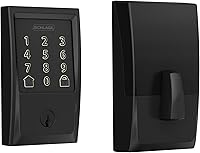
Do not assume that a smart deadbolt will replace a sliding-door lock. The Schlage Encode Smart WiFi Deadbolt Lock fits standard doors with 1-3/8 in to 1-3/4 in door thickness and uses a 2-3/8 in or 2-3/4 in backset.
Those measurements describe a standard deadbolt fit, so compare them with your sliding door before considering it.
The Schlage Encode uses Wi-Fi built into the lock and works with the Schlage Home app. It supports up to 100 access codes, customizable notifications and lock history when paired with the app and connected to a secure Wi-Fi network.
It uses 4 AA batteries and includes a physical backup key. Schlage gives it a satin nickel finish, a zinc material, a touchscreen keypad and a Camelot trim.
For a patio door with unusual hardware, compare the fit questions in Yale Assure locks for Andersen patio doors before treating a standard deadbolt as a direct substitute.
How should you choose remote access?
Choose remote access based on the connection path your door can support. A Bluetooth lock may need a separate bridge, while a Wi-Fi lock can connect directly if the lock and network are compatible.
The August Home Connect Wi-Fi Bridge connects an August Smart Lock to Wi-Fi and Bluetooth. It is an accessory rather than a sliding-door lock, so it makes sense only when the existing August lock already fits the door.
The bridge supports remote lock and open control through a smartphone. It also supports Alexa, Google Assistant and Siri integration, plus alerts when someone enters or exits.
Its listed size is 1.5 x 2.4 x 2.4 in, and it requires a North American outlet with 110-240 volt power. It works with iOS 9.0 or higher and Android 5.0 or higher smartphones.
Place a bridge where its connection can reach the lock and the home network. Keep the access plan simple: local Bluetooth control can be useful at the door, while remote access depends on the bridge and network path.
If your project involves a different entry type, compare the requirements for a smart lock for a garage door or a smart lock mortise system before selecting hardware.
What power does a sliding-door smart lock need?
Most smart locks need either batteries or a suitable wired power source. Check the lock's power method before choosing a location, especially when the sliding door has no nearby outlet or when wiring would cross a moving panel.
Battery power can simplify installation because the door does not need a cable passing through the frame. You still need access to the battery compartment and a routine for checking the low-battery warning.
A wired accessory may solve a power issue for a compatible doorbell or access setup, but it is not automatically a power source for a smart lock. The Hardwired Transformer for Ring Wired Video Doorbells is designed to replace an underpowered doorbell transformer and provides 120V AC 60 Hz input with 16V 30VA output.
This Ring transformer is relevant only when your wider entry system includes a compatible Ring wired video doorbell. It is not a smart lock and does not secure the sliding panel.
Keep lock power and doorbell power separate in your planning. If you need electrical work or must alter wiring near glass and moving panels, use a qualified installer.
For other access layouts, see the guides to a keypad door lock for double doors and a smart WiFi lock for an outdoor gate.
How do you check whether the lock will bind?
A smart lock should operate without forcing the panel, handle or latch. Close the door slowly and watch the locking parts meet, then repeat the movement after the lock is mounted or adjusted.
Check these points:
- The active panel reaches its normal closed position.
- The latch enters the strike without rubbing.
- The handle remains usable from both sides.
- The lock body clears the fixed panel and frame.
- The track stays free of screws, cables and hardware.
- The lock does not stop the panel from sliding fully open.
Binding can come from a small alignment error. Dirt in the track, a sagging panel or worn rollers can also change the lock position, so fix the door's movement before adding smart hardware.
A smart lock should not be used to compensate for a door that can be lifted, pushed aside or opened while the latch is only partly engaged. Review the physical security of the panel, track and frame as a complete system.
Which smart lock features matter most?
The useful features depend on how people enter the home. Keypad access helps when you want codes, while app access helps when you need remote control, alerts or lock history.
Consider these needs:
- Keypad entry for family members who do not carry keys.
- App control for remote lock and open commands.
- Temporary or individual codes for controlled access.
- Lock history when you need an activity record.
- Low-battery alerts for battery-powered hardware.
- Voice control if your home already uses a supported assistant.
- A physical key or another backup method for emergencies.
The Schlage Encode offers a touchscreen keypad, app control, up to 100 access codes, customizable notifications and lock history. The August bridge adds remote access and voice control to a compatible August Smart Lock, but it does not replace the lock itself.
For weather-exposed hardware, compare the need for a best keypad door lock cover or a best smart lock for an outdoor gate before using an indoor-oriented lock outside.
What should you do before installation?
Prepare the door before opening the package. Confirm the measurements, photograph the existing hardware and test the sliding movement before removing anything.
Clean the area around the latch and strike. Check that screws can sit securely in the frame without touching the glass or blocking the moving panel.
Read the installation instructions for the exact lock. Confirm the required door thickness, backset, bore size, strike position, battery access and network setup.
After installation, test the lock with the door open first. Then close the door gently and test locking, opening and manual operation several times.
Keep a backup entry method available while you confirm the system works.
Do not drill into a glass panel or alter a structural frame without knowing the door construction. A glass contractor, locksmith or qualified installer can help when the hardware does not match common dimensions.
If your door uses a European cylinder, the measurement process differs. See the guide to a smart lock for a Euro cylinder before choosing a cylinder-based system.
What is the best choice for your sliding glass door?
Choose a compatible retrofit when your current sliding-door lock has a matching smart accessory. Choose a standard keypad deadbolt only when the door's thickness, backset, bore and frame match the lock's requirements.
That choice is the heart of the decision. A retrofit keeps the door hardware you know, while a replacement changes the fit and may change the look of the frame.
The August Home Connect Wi-Fi Bridge fits a compatible August Smart Lock that needs Wi-Fi access. It is an accessory, not a lock for a sliding panel by itself.
That distinction matters for daily use. If your August lock already fits the door and closes cleanly, the bridge can add remote control and alerts through the home network.
Place the bridge where its signal can reach the lock and your router. It needs a North American outlet with 110-240 volt power, so the nearest outlet may affect where it works best.
The Schlage Encode suits a standard door installation with the stated measurements, keypad access and built-in Wi-Fi. Check the door thickness and backset first, because those numbers describe a standard deadbolt fit.
For a home that needs codes for family or guests, a keypad can be a simple way in. The Encode supports up to 100 access codes, lock history and customizable notifications when paired with the Schlage Home app and connected to a secure Wi-Fi network.
It runs on four AA batteries, and a physical backup key is included. That backup matters if batteries run low or if someone needs entry without a phone or code.
The satin nickel finish and Camelot trim suit a standard door where that style fits the rest of the hardware. On a sliding glass door, the style matters less than whether the lock body clears the frame.
The Ring transformer belongs to a wired video doorbell power setup, not the lock itself. It replaces an underpowered doorbell transformer and gives 16V 30VA output from 120V AC 60 Hz input.
Keep that power question separate from the lock question. A transformer for a wired doorbell will not lock a sliding panel, and it should not be treated as a substitute for lock hardware.
Start again with hardware, panel clearance and lock alignment. Then choose the access method, power source and network features that fit the way your household uses the door.
If local entry is enough, a keypad may be the simplest path. If remote alerts matter, confirm that the lock or bridge can reach your Wi-Fi from the door position.
Set up the system in stages. Test the door movement first, then the lock fit, then the app or code entry, and only then the remote features.
Keep a backup entry method while you test. That small step makes the first week calmer, especially if the panel needs a minor adjustment after mounting.
Care after installation is simple but steady. Check battery warnings, keep the track clean and confirm the latch still meets the strike without rubbing.
Choose the option that matches the door you have, not the door you wish you had. That rule will lead you to a retrofit, a standard keypad lock or a repair before any purchase.
If you need a different keyless entry setup for a recreational vehicle, compare our best keyless entry door locks for RVs guide next.
Frequently asked questions
Can you install a smart lock on a sliding glass door?
You can install smart access on some sliding glass doors, but the lock must match the existing latch, frame and handle area. Check the door's hardware, panel clearance, backset where applicable and available mounting space before choosing a retrofit lock or replacing the hardware.
What should I measure for a smart lock for a sliding glass door?
Measure the door panel, frame, latch position, handle area and the clearance between moving panels. Check the track and any overlapping glass or trim that could block the lock body.
A lock designed for a standard hinged door may not fit a sliding assembly.
Are sliding glass doors harder to secure with a smart lock?
They can require more careful fitting because the door moves along a track and may use a hook, latch or secondary security device instead of a standard deadbolt. A smart lock only helps if the door closes fully and the locking parts line up without binding.
Do smart locks for sliding doors need Wi-Fi?
Wi-Fi is useful for remote access and alerts, but not every smart lock needs a direct Wi-Fi connection. Some systems use Bluetooth locally and add remote control through a bridge, while other locks include Wi-Fi in the lock itself.