Can PoE Security Cameras Work Wirelessly?
A PoE camera needs a cable for power, so it cannot be fully wireless by itself. A wireless bridge can carry network data across a gap, but the camera still needs Ethernet power or a separate power source.
On this page (8 sections)
- Can PoE security cameras work wirelessly?
- What does a wireless bridge change in a PoE setup?
- How do you connect a PoE camera through a wireless bridge?
- Can a PoE camera record without Wi-Fi or internet?
- Should you use a PoE switch, NVR, or wireless bridge?
- Is a wireless bridge reliable enough for security cameras?
- What are the alternatives to a wireless bridge?
- Are wireless PoE security cameras a good fit for your home?
PoE security cameras cannot work completely wirelessly because they need a wired connection for power. A wireless network bridge can carry data between the camera location and your router or recorder, but the camera still needs Ethernet power from nearby PoE equipment.
That distinction matters when a wall, driveway, or detached building makes a long cable run difficult. If you want to explore wired camera options first, see our guide to best PoE security cameras.
Can PoE security cameras work wirelessly?
A PoE camera needs Ethernet for power, even if its network data travels wirelessly through a bridge. The bridge replaces part of the network cable path, not the camera's power connection.
PoE stands for Power over Ethernet. A PoE switch, injector, or compatible recorder sends power and data over an Ethernet cable to the camera.
A wireless bridge creates a network link between two locations. One bridge connects to the main network, and another sits near the camera side; an Ethernet cable then connects the local bridge to the camera's network port.
The camera still needs PoE equipment close enough to power it. That might be a PoE switch or injector near the camera, with a separate power outlet available there.
What does a wireless bridge change in a PoE setup?
A bridge can replace a long Ethernet run that carries network data, but it does not replace the camera's power source. The camera's Ethernet connection can be short if a local PoE switch or injector provides power beside it.
This can help when a camera faces a building across a yard or sits in an outbuilding where trenching a cable is impractical. You still need power at that camera location, and the bridge needs a suitable path back to the main network.
A bridge is different from a Wi-Fi camera. A Wi-Fi camera has a radio built into the camera for network data; a PoE camera uses Ethernet for both power and data, unless an added network device changes how data travels.
The term “wireless PoE camera” can therefore be confusing. It often describes a setup with wireless data and wired power, not a camera that receives PoE power through the air.
How do you connect a PoE camera through a wireless bridge?
Put the bridge near the camera and connect the camera to local PoE equipment with a short Ethernet cable. Connect the other bridge to the main network, then confirm that the recorder or camera software can see the camera.
A basic layout looks like this:
- Connect the main bridge to your router, network switch, or recorder network.
- Pair it with the bridge near the camera, following the bridge instructions.
- Connect the camera-side bridge to a PoE switch or injector.
- Run a short Ethernet cable from the PoE equipment to the camera.
- Check the camera connection and recording in your system.
The exact setup depends on the bridge, recorder, and camera. Confirm that the bridge supports the network mode you need and that local power is available for both the bridge and PoE equipment.
A wireless bridge may reduce the amount of cabling, but it adds more devices to configure and power. If you can run one Ethernet cable from the recorder or switch to the camera, that is usually the simpler arrangement.
Can the wireless bridge connect directly to a PoE camera?
Usually, the bridge handles network data while a separate PoE device supplies power. A bridge's Ethernet port does not automatically provide PoE, so check its specifications before connecting a camera directly.
If the bridge has no PoE output, a local PoE injector or switch is needed between the bridge and camera. Make sure the injector or switch has its own power connection.
The camera's data path and power path should both be clear before installation. If the camera does not appear on the network, check bridge pairing, Ethernet connections, and the camera's power source.
Can a PoE camera record without Wi-Fi or internet?
Yes, a PoE system can record locally without Wi-Fi or internet if the camera and recorder support that setup. Remote access from outside the home generally requires an internet connection, but local recording can use the wired network between camera and recorder.
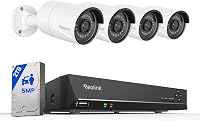
For example, a compatible PoE NVR can connect directly to cameras and store footage locally. The REOLINK 8CH 5MP PoE Security Camera System uses one network cable per camera for power and video to its NVR.
A wireless bridge is only needed when you want to avoid running a long data cable between network locations. It does not make the system dependent on Wi-Fi internet if the bridge creates a local network link to the recorder.
For a closer look at offline camera options, read Can Security Cameras Work Without WiFi, and Why It Matters?.
Should you use a PoE switch, NVR, or wireless bridge?
Use a direct PoE connection when practical; add a bridge only when a cable route is difficult. A PoE switch or recorder provides camera power over Ethernet, while a bridge handles the network link across a gap.
The PoE switch vs NVR comparison explains how those two central components differ. A switch can power cameras and connect them to the network, while an NVR records video and may also provide PoE ports.
If you use a separate switch, learn what its PoE switch uplink port does before connecting the switch to your recorder or router. The uplink carries network traffic between devices; it does not change how the camera receives power.
Check camera and recorder compatibility before buying. The REOLINK RLN8-410 and RLN16-410 are designed for compatible Reolink cameras, so don't assume a different brand's camera will work with them.
Is a wireless bridge reliable enough for security cameras?
A bridge can work when its wireless link is stable, but walls, distance, and interference can affect that link. Test the connection at the camera location before relying on it for ongoing recording.
Place the bridge pair where each unit has a clear path or a strong signal according to its instructions. Thick exterior walls, metal surfaces, and long distances can reduce signal quality.
If a camera drops offline or video pauses, check the bridge link and power before changing camera settings. A wired Ethernet run avoids the wireless link variable, though it takes more installation work.
For outdoor coverage planning, compare best outdoor PoE security cameras and best 4K PoE security cameras. Higher-resolution video can require more network capacity, so include the bridge and network path when planning.
What are the alternatives to a wireless bridge?
If you cannot power a PoE camera at its location, choose a camera with a different power arrangement. A bridge solves the data path, not the lack of electricity.
A plug-in Wi-Fi camera can send data wirelessly while using a wall outlet for power. Our guide to what a plug-in security camera does explains that kind of setup.
A battery camera may avoid a nearby outlet, but battery models have different recording and network limits. A solar panel can help with power in suitable locations; see best solar powered outdoor security cameras for that category.
Before choosing, ask two questions: can you provide power where the camera will go, and can the network reach that spot reliably? If both answers are yes, a bridge with local PoE equipment may fit; if power is unavailable, consider a camera designed for battery use.
Are wireless PoE security cameras a good fit for your home?
Choose a wireless bridge setup when you can power the camera locally but cannot run a long network cable. Choose a direct PoE run when you want a simpler wired connection, and choose a Wi-Fi or battery camera when the camera location cannot support PoE power.
A bridge does not remove Ethernet from the camera itself. It lets the data travel wirelessly over part of the route while a local switch or injector continues to power the camera over a short cable.
For a straightforward multi-camera system, compare the best PoE security cameras and confirm that the recorder matches the cameras you plan to use.
Frequently asked questions
Can a PoE security camera connect to Wi-Fi?
A standard PoE camera uses Ethernet for power and data, so it does not connect to Wi-Fi in place of its cable. Some camera systems can support separate Wi-Fi cameras alongside PoE cameras, but compatibility depends on the camera and recorder.
Check both devices' requirements before mixing connection types.
Does a wireless bridge power a PoE camera?
No. A wireless bridge carries network data between locations, but it does not provide PoE power to the camera.
Keep a PoE switch or injector near the camera, or use another power source that the camera supports, and confirm the bridge can link to the rest of the network.
Can a PoE camera record without internet?
It can, if it has a local recorder or storage setup that supports recording without internet. Internet access is usually needed for remote viewing from outside the home, while local monitoring and recording can continue on a compatible system.
Check the recorder and camera instructions for the exact setup.
Is a Wi-Fi camera the same as a wireless PoE camera?
No. A Wi-Fi camera sends data over a wireless network, while PoE describes power delivered over Ethernet.
A camera might use Wi-Fi for data and a power adapter for electricity, but that is not PoE.
A bridge can remove a long data cable while leaving the PoE power cable in place.