5 Best SSDs for Security Camera Recording (November 2026)
The best surveillance ssd hard drive include the Western Digital 8TB WD Blue PC Internal for large everyday capacity, the Seagate Skyhawk 4TB Video Internal Hard Drive for dedicated NVR systems, and the Seagate Skyhawk 6TB Video Internal Hard Drive for longer retention with many cameras.
On this page (11 sections)
- What is the best surveillance SSD hard drive for continuous recording?
- The best SSDs and surveillance drives for security camera recording
- Side by side comparison of the best surveillance drives
- How we compared these surveillance SSD and hard drive picks
- Is a surveillance SSD hard drive better than a surveillance hard drive?
- How much capacity do you need for security camera recording?
- Which form factor fits your recorder: 2.5 inch or 3.5 inch?
- SSD vs surveillance hard drive: what matters for 24x7 video writes?
- How do you install and care for a surveillance drive?
- What are the trade offs between SSD, desktop and surveillance drives?
- Which surveillance SSD hard drive should you buy?
The best surveillance SSD hard drive choice depends on whether you need true solid state speed or surveillance tuned hard drive endurance. For most NVR and DVR systems, the Seagate Skyhawk 4TB is the safest fit because it is made for continuous video.
The SIX 1TB is the only true SSD here, and it suits compact 2.5 inch bays.
Our score weighs specs, features and buyer feedback against what you are shopping for. We compared capacities, form factors, interfaces and workload claims across these five drives.
We did not test them hands on.
Our picks at a glance
-
1
 Best for large everyday capacity
Western Digital 8TB WD Blue PC Internal
9.7/10 our score
See it on Amazon -
2
 Best for dedicated NVR systems
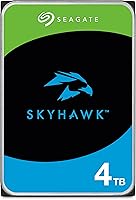
Seagate Skyhawk 4TB Video Internal Hard Drive
9.4/10 our score
See it on Amazon -
3
 Best for longer retention with many cameras
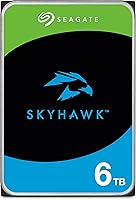
Seagate Skyhawk 6TB Video Internal Hard Drive
9.2/10 our score
See it on Amazon
- 4
 Check it
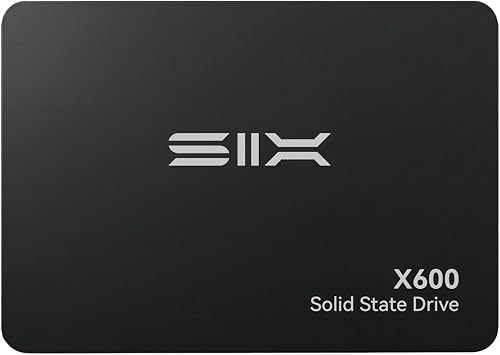
SIX 1TB SATA 2.5 SSD Internal Solid
Best for compact 2.5 inch solid state fit - 5
 Check it
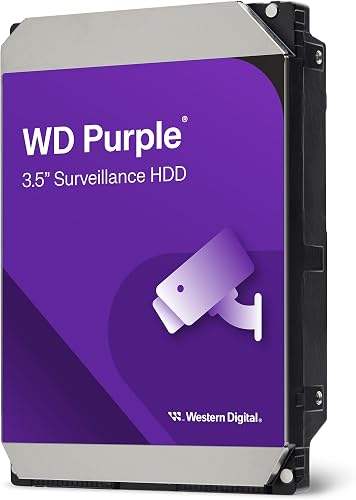
Western Digital 2TB WD Purple Surveillance Internal
Best for small mainstream surveillance systems
What is the best surveillance SSD hard drive for continuous recording?
The best surveillance SSD hard drive for most recorders is a surveillance tuned 3.5 inch hard drive, not a general purpose SSD. Security video writes all day, so workload tuning and capacity matter more than fast boot speed.
An SSD helps when space is tight or your recorder has a 2.5 inch bay. It has no moving parts and resists shock and vibration.
The trade off is capacity, since the 1TB SSD here holds far less footage than the 4TB, 6TB and 8TB hard drives.
For background on drive types, read What Is an NVR Hard Drive, and What It Does?. It explains why NVR drives differ from desktop drives.
The best SSDs and surveillance drives for security camera recording
The five picks below cover the main choices you will face. They include surveillance hard drives, one large desktop drive and one true SSD.
Choose by recorder fit first, then by capacity.
Western Digital 8TB WD Blue PC Internal: Best for large everyday capacity
- 8TB capacity
- 3.5 inch form factor
- SATA 6 Gb/s
- 5640 RPM
- 256 MB cache
- Free Acronis True Image WD Edition cloning software
An 8TB internal drive for desktop use where storage volume matters more than surveillance specific tuning.
Pros
- Largest capacity in this group
- Standard 3.5 inch SATA fit
- Cloning software included
Cons
- Desktop drive, not surveillance tuned
- 5640 RPM rotation
This drive suits buyers who want the most storage in this group for a desktop style recorder or PC. At 8TB, it holds more footage than any other pick here.
That extra room helps when you keep many days of video or run several cameras.
It is a 3.5 inch internal drive with SATA 6 Gb/s, 5640 RPM and 256 MB cache. Western Digital positions WD Blue for everyday computing and office use, not for surveillance specific writes.
The drive includes free Acronis True Image WD Edition cloning software, which helps with setup on a PC.
The trade off is tuning. It lacks the surveillance workload features listed for Skyhawk and WD Purple.
If your system records lightly or you mainly need bulk storage, that may be fine. For heavy 24x7 camera loads, a surveillance drive is a better match.
Seagate Skyhawk 4TB Video Internal Hard Drive: Best for dedicated NVR systems
- 4TB capacity
- 3.5 inch SATA 6Gb/s
- 64MB cache in title
- Built for DVR and NVR systems
- SkyHawk Health Management
- 3-year in-house Rescue Data Recovery Services
A video optimized 4TB drive for DVR and NVR security camera systems with health monitoring.
Pros
- Built for video surveillance
- RV sensors for multi-bay systems
- Health Management monitoring
Cons
- Less capacity than the 6TB and 8TB picks
- Internal drive only
This drive suits a dedicated DVR or NVR where video reliability matters most. Seagate built Skyhawk for video surveillance, with support for workloads up to 180TB per year.
That rating covers up to 64 simultaneously streaming HD cameras with zero dropped frames, according to Seagate.
It is a 3.5 inch SATA 6Gb/s internal drive with 64MB cache in the title. Built in RV sensors help it keep performance in multi-bay systems.
SkyHawk Health Management lets you monitor drive health, and Seagate includes three years of in-house Rescue Data Recovery Services.
The trade off is capacity. At 4TB, it holds less than the 6TB Skyhawk and 8TB WD Blue.
Choose this one when fit for surveillance matters more than maximum retention.
Seagate Skyhawk 6TB Video Internal Hard Drive: Best for longer retention with many cameras
- 6TB capacity
- 3.5 inch SATA 6Gb/s
- 256MB cache
- Built for DVR and NVR systems
- SkyHawk Health Management
- three-year in-house Rescue Data Recovery Services
A 6TB video drive for systems that need more retention while keeping surveillance specific features.
Pros
- More retention than the 4TB pick
- Video optimized workload rating
- Health Management monitoring
Cons
- Slower rotational speed listed than the 4TB pick
- Still an internal 3.5 inch drive
This drive suits systems that need longer retention without giving up surveillance tuning. At 6TB, it stores 50 percent more than the 4TB Skyhawk above.
That extra space can add days of footage for the same camera setup.
It is a 3.5 inch SATA 6Gb/s drive with 256MB cache, built for DVR and NVR security camera systems. Seagate lists workload support up to 180TB per year, for up to 64 HD cameras with little to zero dropped frames.
RV sensors help in multi-bay systems, and SkyHawk Health Management supports monitoring.
The trade off is speed on paper. Its listed rotational speed is 5400 rpm, lower than the 4TB Skyhawk at 7200 rpm.
For steady surveillance writes, capacity and tuning usually matter more than that number.
SIX 1TB SATA 2.5 SSD Internal Solid: Best for compact 2.5 inch solid state fit
- 1TB capacity
- 2.5 inch form factor
- SATA III 6 Gb/s
- Read up to 560MB/s
- 7mm form factor
- TRIM support
A 1TB 2.5 inch SSD for laptops, desktops and smaller bays where a 3.5 inch drive will not fit.
Pros
- Only true SSD in this group
- Compact 2.5 inch size
- Fast read speed for system use
Cons
- Smallest capacity here
- General purpose SSD, not surveillance tuned
This SSD suits compact recorders, laptops and small desktops that need a 2.5 inch drive. At 1TB with reads up to 560MB/s, it is far faster than a spinning hard drive for system tasks.
It uses SATA III 6 Gb/s and a 7mm form factor.
SIX says it fits most laptops, desktops, NAS systems and gaming consoles, with backward compatibility for SATA I and SATA II. It has no moving parts, runs silently and resists shock and vibration.
TRIM support and ECC help with long term use, and SIX backs it with a 3-year warranty.
The trade off is storage. One terabyte fills up much faster than the 4TB to 8TB drives here.
It is also a general purpose SSD, not a surveillance tuned drive. Use it where size or speed matters, not where long retention is the goal.
For 2.5 inch choices, our best 2.5 hard drive for surveillance guide covers the fit checks in more detail.
Western Digital 2TB WD Purple Surveillance Internal: Best for small mainstream surveillance systems
- 2TB capacity
- 3.5 inch form factor
- SATA 6 Gb/s
- 64 MB cache
- WD AllFrame technology
- Supports up to 180 TB/yr workload rate
A 2TB surveillance drive for smaller systems where lower capacity keeps cost and heat in check.
Pros
- Surveillance tuned AllFrame technology
- 180 TB/yr workload support
- Compact capacity for small systems
Cons
- Lowest HDD capacity here
- 1TB through 2TB support up to eight bays
This drive suits small mainstream surveillance systems with a handful of cameras. At 2TB, it is the smallest hard drive here, which can be a plus if you want lower heat and modest retention.
WD engineered WD Purple for 24x7 video surveillance recording.
WD AllFrame technology targets write intensive, low bit rate, high stream count workloads. Western Digital lists support for up to 180 TB per year workload rate.
The drive is 3.5 inch with SATA 6 Gb/s, 64 MB cache and 5400 rpm.
The trade off is capacity and bay limits. Western Digital notes 1TB through 2TB models support up to eight bays, while 3TB and above support up to 16 bays.
If you plan to grow camera count, step up to the 4TB or 6TB Skyhawk picks instead.
If you are unsure between drive types, compare a nas hard drive vs surveillance drive before you order.
Side by side comparison of the best surveillance drives
The table below makes the main trade offs easy to scan. Capacity, form factor and tuning separate these drives more than brand does.
Check your recorder bay before you compare anything else.
| Product | Best for | Capacity | Form factor | Interface | Our score |
|---|---|---|---|---|---|
| Western Digital 8TB WD Blue PC Internal | large everyday capacity | 8 TB | 3.5 inch | SATA 6 Gb/s | 9.7 |
| Seagate Skyhawk 4TB Video Internal Hard Drive | dedicated NVR systems | 4 TB | 3.5 inch | SATA 6Gb/s | 9.4 |
| Seagate Skyhawk 6TB Video Internal Hard Drive | longer retention with many cameras | 6 TB | 3.5 inch | SATA 6Gb/s | 9.2 |
| SIX 1TB SATA 2.5 SSD Internal Solid | compact 2.5 inch solid state fit | 1 TB | 2.5 inch | SATA III 6 Gb/s | 9.1 |
| Western Digital 2TB WD Purple Surveillance Internal | small mainstream surveillance systems | 2 TB | 3.5 inch | SATA 6 Gb/s | 9.0 |
How we compared these surveillance SSD and hard drive picks
We checked specs, capacities, form factors and workload claims for each drive. We gave more weight to surveillance tuning, because continuous video is the core job here.
We also weighed capacity, since retention days drive real buying decisions.
We looked at buyer patterns in reviews without repeating ratings or counts. Drivers often mention noise, fit and long term reliability in recorder use.
We used those patterns only as background, not as proof.
We excluded drives that did not fit standard SATA recorder bays. We also kept only internal drives, since this guide focuses on recorder storage.
For external storage, see our best external surveillance hard drive roundup.
Is a surveillance SSD hard drive better than a surveillance hard drive?
A true SSD is better for speed, silence and shock resistance. A surveillance hard drive is better for capacity and workload tuning for long retention.
Most buyers should pick the surveillance hard drive unless space forces a 2.5 inch SSD.
An SSD has no moving parts, so vibration from a recorder fan or a wall mount matters less. It also boots and responds faster in a PC or compact recorder.
The SIX 1TB reads up to 560MB/s, which tops every hard drive here.
The cost in this group is capacity. One terabyte gives you far fewer days of footage than 4TB or 6TB.
If you record continuously, that gap shows up fast. A surveillance hard drive also carries workload ratings near 180TB per year that a general SSD does not list here.
When an SSD makes sense
Choose an SSD for a 2.5 inch bay, a laptop based recorder or a system that runs on battery backup. It also suits motion based recording where total footage stays low.
When a surveillance hard drive makes sense
Choose a surveillance hard drive for continuous recording, many cameras or long retention. Skyhawk and WD Purple are built for that pattern.
How much capacity do you need for security camera recording?
Capacity needs start with camera count and retention days. Multiply your daily footage by the days you want to keep, then add headroom for growth.
A 2TB drive fits small systems, while 4TB to 6TB suits larger setups.
Recording mode changes the math. What Is Continuous Recording, and How It Is Used? explains the all day write pattern.
Continuous mode fills a drive fastest, so plan capacity for the longest period you may need to review.
Motion mode can stretch the same drive much further. What Is Motion Triggered Recording, and How Does It Work? covers when motion footage is enough.
Many homes use motion mode for side yards and continuous mode for entry points.
Capacity by system size
Small systems with 2 to 4 cameras often start at 2TB. Mid size systems with 8 or more cameras often need 4TB or 6TB.
The 8TB WD Blue fits buyers who want headroom for growth.
Retention check
If footage fills faster than expected, shorten retention or add a larger drive. Do not wait until the recorder overwrites the footage you need.
Which form factor fits your recorder: 2.5 inch or 3.5 inch?
Form factor is the first fit check, before capacity or brand. Most full size NVR and DVR units use 3.5 inch drives.
Compact units and laptops use 2.5 inch drives.
Measure the bay and check the manual for maximum capacity. Some recorders limit drive size or need specific screws and rails.
A 2.5 inch drive in a 3.5 inch bay may need an adapter bracket. A 3.5 inch drive will not fit a 2.5 inch bay.
3.5 inch drives
Four picks here are 3.5 inch internal drives. They give you 2TB to 8TB in standard recorder bays.
They are the default choice for most NVR and DVR systems.
2.5 inch drives
The SIX 1TB SSD is 2.5 inch with a 7mm height. It fits laptops, compact desktops and small recorders.
Check bay depth and connector placement before you buy.
SSD vs surveillance hard drive: what matters for 24x7 video writes?
Workload rating matters more than peak read speed for camera storage. Surveillance drives list ratings near 180TB per year.
That number describes sustained writes, which is what cameras do all day.
Cache size helps with bursts, but it does not replace workload tuning. The 6TB Skyhawk lists 256MB cache and the WD Blue lists 256 MB cache.
The WD Purple lists 64 MB cache. None of those numbers alone tells you which drive records video best.
RV sensors and health monitoring matter in multi-bay systems. Skyhawk lists RV sensors and SkyHawk Health Management.
WD Purple lists AllFrame tuning for surveillance streams. Those features target dropped frames and drive health over time.
Dropped frames and playback
Fewer dropped frames means smoother live view and playback. Surveillance tuning aims to reduce frame loss during heavy writes.
A desktop drive can still work, but it lacks that focus.
Heat, noise and vibration
Surveillance drives are built for always on heat and vibration in NVR cabinets. An SSD runs silent with no moving parts.
A hard drive may hum, so place the recorder where noise is acceptable.
How do you install and care for a surveillance drive?
Install starts with power off and a check of the bay size. Mount the drive with the screws from your recorder kit.
Connect SATA power and data cables firmly, then format the drive in the recorder menu.
Let the recorder format the drive before you enable recording. Formatting prepares the file system and confirms the drive is detected.
Check that the recorder shows the full capacity.
Keep the recorder ventilated and dust free. Heat shortens drive life, so leave space around vents.
Avoid moving a running hard drive, since spinning disks do not like shock. An SSD tolerates movement better, but steady placement is still best.
Back up critical footage if the video protects people or property. A drive can fail, even a surveillance tuned one.
Copy important clips to external storage on a regular schedule.
What are the trade offs between SSD, desktop and surveillance drives?
Each drive type in this group solves a different problem. The SSD wins on speed and size.
The desktop drive wins on capacity per effort. Surveillance drives win on tuning for continuous video.
The WD Blue 8TB gives the most room for footage. It lacks surveillance tuning, so heavy camera loads may stress it more.
The Skyhawk 4TB and 6TB balance tuning with solid capacity. The WD Purple 2TB fits small systems at lower capacity.
The SIX 1TB SSD fits where nothing else will. It will fill fastest, so pair it with motion recording or short retention.
That mix works for a single camera or a compact recorder.
Which surveillance SSD hard drive should you buy?
The best surveillance SSD hard drive for most buyers is the Seagate Skyhawk 4TB, because it matches 24x7 video with proven surveillance features. It is the safest pick for a standard 3.5 inch NVR or DVR bay.
Pick the Skyhawk 6TB if you want more retention days. Pick the WD Purple 2TB for a small system with few cameras.
Pick the WD Blue 8TB if capacity matters more than surveillance tuning. Pick the SIX 1TB SSD only if you need a 2.5 inch solid state fit.
Before you order, confirm bay size, maximum capacity and recording mode. That check takes two minutes and prevents most returns.
Then choose the drive that fits your recorder and your retention goal.
Our top 3 picks at a glance
-
1
Best for large everyday capacity
Western Digital 8TB WD Blue PC Internal
9.7/10 our score
See it on Amazon -
2
Best for dedicated NVR systems
Seagate Skyhawk 4TB Video Internal Hard Drive
9.4/10 our score
See it on Amazon -
3
Best for longer retention with many cameras
Seagate Skyhawk 6TB Video Internal Hard Drive
9.2/10 our score
See it on Amazon
Frequently asked questions
Can an SSD be used for security camera recording?
Yes, an SSD can record security video if your recorder supports a 2.5 inch SATA drive and the capacity fits your retention needs. It runs with no moving parts and reads fast.
For long retention, a larger surveillance hard drive often gives more days of footage for the same effort.
Is a surveillance hard drive better than a regular hard drive for cameras?
A surveillance hard drive is usually better for 24x7 video because it is tuned for continuous writes and many simultaneous streams. Seagate Skyhawk and WD Purple both list workloads up to 180TB per year.
A regular desktop drive can work in light setups, but it is not built around always on video.
How much storage do security cameras need?
It depends on camera count, resolution, frame rate and how many days you want to keep. More cameras and longer retention need more terabytes.
Start with your recorder and camera count, then choose capacity for the retention period you actually need.
What size drive fits most NVR and DVR systems?
Most full size recorders use 3.5 inch SATA drives. Compact recorders and laptops use 2.5 inch drives.
Check your recorder manual for the bay size, maximum capacity and mounting screws before you order.
Does motion recording save storage compared with continuous recording?
Yes, motion triggered recording writes less footage because it saves mainly when motion is detected. Continuous recording writes around the clock.
If you need to review every minute, plan for continuous storage.
If events are enough, motion mode can extend retention on the same drive.