What Is a Solar Security Camera, and How It Is Used?
On this page (9 sections)
- How a Solar Security Camera Works From Sunlight to Screen
- Key Advantages for the Everyday Homeowner
- Understanding the Limitations and Best Practices
- Solar vs. Traditional Wired Cameras: A Quick Comparison
- Where Solar Cameras Are Most Useful
- Maintenance and What to Expect Long-Term
- Your Simple Checklist for Choosing a Solar Security Camera
- Conclusion
- Frequently Asked Questions
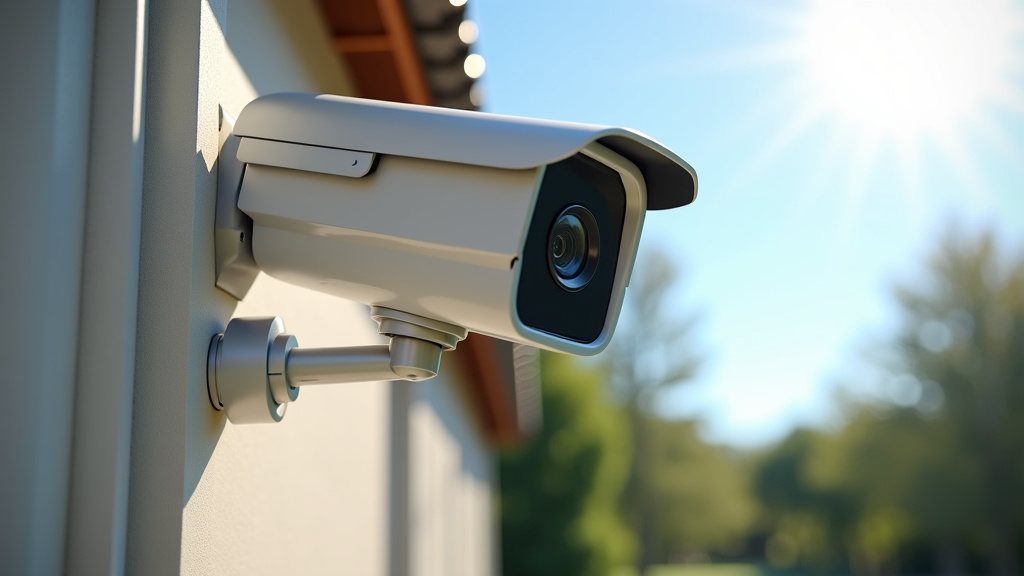
A solar security camera is a wire-free surveillance device that uses a built-in solar panel to charge its battery, allowing it to operate without traditional power sources. It combines motion-activated recording with renewable energy for reliable, off-grid protection.
You can place these cameras almost anywhere you have sunlight, from your front porch to a remote garden shed. We found that their main advantage is the complete freedom from messy wires and the need for nearby electrical outlets. This makes them a hassle-free solution for many homeowners.
- A solar security camera is a wire-free camera powered by a solar panel.
- It stores sunlight to power the camera day and night.
- You install it anywhere with sun exposure.
- It’s great for areas without easy access to power.
- They provide reliable monitoring with minimal upkeep.
Below, we break down exactly how these cameras work, from sunlight to your smartphone, so you can decide if they’re right for your home.
How a Solar Security Camera Works From Sunlight to Screen
A solar security camera is a clever combination of two main parts. First, there is the solar panel that sits on top or nearby. Second, there is the actual camera and battery unit. The panel’s job is to collect energy from the sun all day long. This energy isn’t used instantly. Instead, it charges a rechargeable battery inside the camera housing. Think of the battery like a small power bank for your phone. The solar panel simply keeps that power bank topped up.
The camera itself only turns on when it senses motion. This is a key feature for saving power. When motion is detected, the camera wakes up. It starts recording video and can send an alert directly to your smartphone. Once the activity stops, it goes back to sleep. This efficient cycle is why the battery can last for days, even with limited sunlight. We found that most models are designed to work even through several cloudy days on a single full charge.
The Core Components Inside the Box
When you purchase a solar camera kit, you’ll get a few key items. Understanding them helps you know what you’re buying.
- The Solar Panel: This is usually a small, flat panel. Many are monocrystalline, which means they are efficient at converting sunlight to power even in less-than-perfect conditions.
- The Camera Unit: This contains the lens, sensors, microphone, speaker, and Wi-Fi radio. Most are weatherproof to handle rain, snow, and dust.
- The Battery: Often a lithium-ion battery pack. Its capacity, measured in mAh, determines how long the camera can run without any sun.
- The Mounting Hardware: Brackets, screws, and anchors to attach both the panel and camera to walls, poles, or eaves.
How Motion Detection Saves Energy
Why not just leave the camera recording all the time? That would drain the battery very quickly. The motion sensor acts like a security guard’s eyes. It constantly watches for movement. Only when something moves does it give the camera the “okay” to start working. This “event-based” recording is much more energy-efficient. It also means you only get notifications for actual activity, not hours of empty footage.
Key Advantages for the Everyday Homeowner
The biggest benefit is obvious: no wires. You don’t need to hire an electrician to run cables to an outlet. This freedom changes where you can place a camera. You can monitor a detached garage, a barn, a vacation cabin, or the far corner of your backyard. We found that this flexibility is the top reason people choose solar models.
There are several other practical advantages you might not have considered.
- Simplicity of Installation: You can often install it yourself with basic tools in about 30 minutes. It’s as easy as hanging a picture frame.
- No Energy Costs: Once installed, the sun provides all the power. It won’t add even a penny to your monthly electricity bill.
- Durability in Outages: During a power outage that knocks out your wired cameras, a solar camera with a charged battery keeps working. It provides security when you might need it most.
- Reduced Clutter: No ugly wires running along your siding or through walls means a cleaner look for your home’s exterior.
Understanding the Limitations and Best Practices
Being honest is important. Solar cameras aren’t perfect for every single situation. Their performance depends on one main factor: sunlight. If you mount a panel in a spot that is shaded by a tree or building most of the day, the battery won’t charge properly. Many guidelines suggest that the panel needs at least 4-5 hours of direct sunlight per day to maintain a full charge (Consumer Reports).
Another consideration is video quality and streaming. Because they are wire-free and battery-powered, most solar cameras record at a slightly lower resolution than their wired counterparts. They also often record short clips triggered by motion, rather than continuous 24/7 footage. This is a necessary trade-off for their wire-free nature.
Getting the Most From Your Solar Camera Placement
To avoid frustration, follow these simple rules during setup.
- Sun First, View Second: Prioritize a location where the solar panel gets unobstructed southern exposure (in the Northern Hemisphere).
- Test Before You Mount: Use the camera’s app to check its live view and Wi-Fi signal strength from the proposed spot.
- Aim for Motion, Not People-Watching: Angle the camera to capture the area where motion will occur, like a walkway, not the middle of a busy street.
- Think About Seasonal Changes: Remember that the sun’s path changes with the seasons. A spot that is sunny in summer might be shaded in winter.
Solar vs. Traditional Wired Cameras: A Quick Comparison
Is a solar camera better than a standard wired one? The answer depends entirely on your needs. Here’s a straightforward comparison to help you decide.
| Feature | Solar Security Camera | Traditional Wired Camera |
|---|---|---|
| Power Source | Rechargeable battery + solar panel | Direct connection to a wall outlet or power line |
| Installation | Wire-free, DIY-friendly | Often requires drilling and wiring |
| Location Freedom | Very high – anywhere with sunlight and Wi-Fi | Limited by proximity to power sources |
| Reliability in Bad Weather | Good, but depends on battery charge level | Very high, as long as power is on |
| Ongoing Cost | $0 (after purchase) | Slight increase to electricity bill |
Where Solar Cameras Are Most Useful
Beyond the front porch, these cameras shine in specific scenarios. They are ideal for monitoring areas where running power would be difficult, expensive, or unsightly.
- Remote Properties: Cabins, farms, or construction sites without reliable grid power.
- Secondary Structures: Detached garages, sheds, or workshops far from the house.
- Perimeter Monitoring: The back fence line or side gate where no outlets exist.
- Renter-Friendly Security: Since you don’t have to modify the property, they are perfect for apartments or rental homes.
A Note on Connectivity and Smart Features
A solar camera still needs a Wi-Fi connection to send alerts and video to your phone. If the Wi-Fi signal is weak at your chosen location, the camera won’t work well, no matter how sunny it is. Some premium models offer cellular data plans as a backup, but this adds a monthly fee. Most cameras also include two-way audio, allowing you to speak to someone at your door, and night vision using infrared LEDs for clear footage in the dark.
Maintenance and What to Expect Long-Term
These cameras are built for low maintenance, but “low” doesn’t mean “zero.” The solar panel should be wiped clean of dust, leaves, or bird droppings a few times a year. A dirty panel can’t collect sunlight effectively. The battery inside the camera is rechargeable, but like all batteries, it will degrade over several years. Most experts suggest that lithium-ion batteries have a lifespan of about 3-5 years before their capacity noticeably drops (Battery University). Replacement is usually possible with the right tools.
Your Simple Checklist for Choosing a Solar Security Camera
Ready to pick the right one? Use this checklist when you shop.
- [ ] Battery Capacity: Look for at least 10,000 mAh for reliable multi-day performance.
- [ ] Solar Panel Efficiency: Monocrystalline panels are generally better than polycrystalline ones.
- [ ] Video Resolution: Aim for 1080p (Full HD) for clear, detailed footage.
- [ ] Weather Rating: An IP65 or higher rating ensures it can handle rain and dust.
- [ ] Smart Features: Ensure it has motion alerts, night vision, and two-way audio.
- [ ] Brand & App: Choose a brand with a reliable mobile app for viewing and managing your camera.
Conclusion
A solar security camera offers a practical, wire-free way to monitor your property. It uses sunlight to power motion-activated recording, giving you flexibility and peace of mind. The key is proper placement where the panel gets enough sun. This ensures reliable operation through days and nights. For many homeowners, the freedom from wires and electricity costs makes them an excellent choice.
Your next step is simple. First, walk around your property and identify spots that get several hours of direct sun. Then, check if those locations have a strong Wi-Fi signal. These two factors will determine if a solar camera is the right fit for your home.
Frequently Asked Questions
How long does the battery last on a solar security camera?
The battery life depends on sunlight exposure and how often motion triggers recording. With adequate daily sun (4-5 hours), most cameras maintain a full charge. On cloudy days or in low-light spots, a fully charged battery can typically power the camera for several days before needing another sunny period to recharge.
Do solar security cameras work at night or during winter?
Yes, they work at night using the power stored in the battery. The camera’s night vision activates automatically. Performance in winter depends on sun exposure. Shorter, cloudier days can reduce charging. A properly charged battery and correct panel placement, avoiding winter shade, are key for reliable cold-weather operation.
What happens if the Wi-Fi goes out or is too weak?
The camera needs Wi-Fi to send you alerts and video clips to your phone. If the signal drops, it will likely continue recording to its internal storage or a microSD card. However, you won’t receive real-time notifications. Always test the Wi-Fi signal at your proposed location before final installation.
Are solar security cameras harder to install than wired ones?
They are actually much easier. Installation is truly DIY-friendly. You only need to mount the camera and panel with basic tools. There is no need to run cables to a power outlet or drill through walls for wiring. The entire process can often be completed in under 30 minutes.
Do I need a subscription for cloud storage?
Many solar cameras offer free local storage via a microSD card slot. Cloud storage, which saves footage online, often requires a monthly fee for extended history and backup. Check the specific model’s features. Some brands provide a short trial period for cloud services to let you decide if it’s worth it.