9 Best Wireless Security Camera Systems (November 2026)
The best wireless security camera systems include the Gianteye 2K Security Camera System for wire-free home coverage, the ANNKE Wireless Security Camera System for expandable plug-in systems, and the Hiseeu Home Security Camera System for large property coverage.
On this page (8 sections)
- Which wireless security camera system is best for your home?
- The best wireless security camera systems ranked
- How do wireless security camera systems reduce cable installation?
- Should you choose 2.4GHz or 5GHz Wi-Fi?
- How much storage does a wireless camera system need?
- What power source is best for a wireless camera system?
- More guides on this topic
- Which wireless security camera system should you choose?
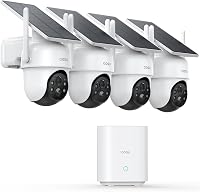
The best wireless security camera system for most homes is the Gianteye 2K Security Camera System. Its 4-camera kit combines solar and battery power, dual-band Wi-Fi, 2K color night vision, human detection, two-way audio and local or optional cloud storage.
That mix suits homes where running cable to every corner would be slow or messy. You can place cameras where coverage is needed and let the detachable solar panel handle daily charging.
Two hours of daily sunlight can help maintain operation, while the built-in battery supports cloudy days or poor weather. That backup matters in winter or shaded spots.
Wireless can mean different things. Some systems use wireless links between cameras and an NVR but still need outlet power, while others use batteries or solar panels to reduce cable work.
Plug-in systems often suit continuous recording because power is constant. Battery and solar systems suit flexible placement because you are not tied to a nearby outlet.
The cameras use 2K resolution and a built-in spotlight for full-color night vision when motion is detected. That can help you recognize people, packages and activity after dark.
Smart human detection aims to reduce alerts from animals or moving objects by focusing on people. Storage is local with a microSD card or through optional cloud storage.
If you are comparing brands, start with our guide to Ring vs Arlo vs Blink.
For a brand-specific alternative, see the best Reolink wireless security camera system.
Before you buy, check outdoor light, Wi-Fi strength and mounting points. A wire-free system works best when the panel gets sun and the camera gets a strong signal.
Our picks at a glance
-
1
 Best for wire-free home coverage
Gianteye 2K Security Camera System
9.5/10 our score
See it on Amazon -
2
 Best for expandable plug-in systems
ANNKE Wireless Security Camera System
9.4/10 our score
See it on Amazon -
3
 Best for large property coverage
Hiseeu Home Security Camera System
9.1/10 our score
See it on Amazon
- 4
 Check it
Rraycom 5G/2.4G Security Cameras Wireless Outdoor
Best for dual-band battery coverage - 5
 Check it
aosu 2K Solar Security Cameras Wireless Outdoor
Best for solar multi-camera coverage - 6
 Check it
OOSSXX 5MP Wireless WiFi Outdoor Security Camera
Best for high-capacity local recording - 7
 Best for simple 2.4GHz setupCheck it
- 8
 Check it
CAMCAMP Home Security Camera System Wireless Outdoor
Best for large plug-in camera layouts - 9
 Check it
ANNKE 5MP 10CH Wireless Security Camera System
Best for 5MP expandable coverage
Which wireless security camera system is best for your home?
The best choice depends on power access, camera count, recording needs and Wi-Fi conditions. Gianteye is the strongest all-around wire-free pick, while ANNKE and Hiseeu suit plug-in NVR coverage.
Power access should come first because it shapes the whole installation. A camera that needs an outlet must sit near that outlet, even if the ideal view is farther away.
Camera count comes next because more cameras can reduce blind spots but also add mounting and maintenance work. A smaller kit may suit a house with clear entry points, while a larger kit may suit a bigger yard.
Recording needs matter because continuous recording uses more storage and power than event-based recording. Motion-triggered systems can be easier to search later because they focus on activity.
Wi-Fi conditions decide whether live viewing and alerts arrive smoothly. Distance, walls and interference can weaken a connection even when the camera itself is working well.
We compared camera counts, connection types, power sources, storage, night vision, detection features and expansion paths. Our score weighs specs, features and buyer feedback against what you are shopping for.
Night vision is worth comparing in practical terms. Color footage can make identification easier, while infrared footage may still show movement clearly in darkness.
Expansion paths matter if your needs may grow after the first installation. A system that accepts more cameras can let you add a garage or side gate later without replacing the recorder.
A standalone camera is different from a full multi-camera system. Read Standalone Camera vs Security System, and Why It Matters if you are unsure which setup fits your property.
Shared viewing, simple controls and clear alerts can matter as much as resolution once the cameras are mounted. The right pick is one you can install in the right places and keep running without constant adjustments.
The best wireless security camera systems ranked
Gianteye leads this group for flexible outdoor placement, while the other systems fit specific coverage, storage or power needs. Read the power details closely because wireless video does not always mean wire-free installation.
Gianteye 2K Security Camera System: Best for wire-free home coverage
- 4-camera kit
- 2K color night vision
- Solar and battery powered
- 2.4GHz and 5GHz Wi-Fi
- Local or cloud storage
Solar and battery power reduce cable planning for outdoor coverage. Dual-band Wi-Fi, 2K video and color night vision suit homes that want flexible installation.
Pros
- Solar and battery power
- 2K color night vision
- Dual-band Wi-Fi
Cons
- MicroSD card not included
- Solar performance depends on sunlight
Gianteye is the best fit when you want to reduce both network cable installation and outlet planning. The kit has 4 solar and battery-powered cameras, so outdoor placement is more flexible than with a plug-in NVR system.
Its 2K video, color night vision and built-in spotlight focus on useful detail after dark. The cameras also support human detection, mobile alerts and two-way audio, which can reduce unnecessary motion notifications and help you speak with visitors.
The system supports both 2.4GHz and 5GHz Wi-Fi. Use 2.4GHz where wall penetration and range matter more, and consider 5GHz where the cameras are closer to the router and smoother streaming is the priority.
Storage is flexible. You can use a microSD card, which is not included, or choose optional cloud storage.
Solar output depends on sunlight, placement, season and settings, so place the panels where they receive dependable light.
Choose Gianteye for a home that needs broad outdoor coverage without running network cable to every camera. If you prefer more cameras and local NVR recording, compare it with Hiseeu below.
ANNKE Wireless Security Camera System: Best for expandable plug-in systems
- 4 dual-lens PT cameras
- 10-channel NVR
- 1TB HDD
- 350° pan and 90° tilt
- 2.4GHz and 5GHz Wi-Fi
This system suits buyers who want local recording and room to add cameras. The cameras and NVR need outlet power, while Wi-Fi removes the need for BNC cables.
Pros
- 10-channel expansion
- 1TB local storage
- Dual-lens PT cameras
Cons
- Cameras and NVR need power
- Less suitable where outlets are unavailable
ANNKE suits buyers who want local recording, PT coverage and room to expand. The kit includes 4 dual-lens cameras, a 10-channel 4K NVR and a 1TB hard drive.
Each camera combines a fixed wide-angle lens with a PT lens. The cameras support 350° pan, 90° tilt, smart auto tracking and up to 6 preset positions, which can help cover driveways, porches and backyards with fewer blind spots.
This is a wireless camera system, but the cameras and NVR both need outlet power. The wireless connection removes the need for BNC cables between cameras and the recorder, yet you still need to plan power locations.
The NVR supports continuous recording, motion detection recording and up to 10 compatible cameras. Its 1TB drive gives you local storage without a required subscription, and the system supports 2.4GHz and 5GHz Wi-Fi.
Pick ANNKE when you want a clean wireless video layout with fixed power. For battery-powered choices, compare this system with our guide to best battery security camera systems.
Hiseeu Home Security Camera System: Best for large property coverage
- 12 5MP cameras
- 4K NVR
- 3TB HDD
- 2.4GHz and 5GHz Wi-Fi
- 16-channel expansion
The 12-camera kit covers many indoor and outdoor zones with local recording. It is a strong fit for large homes or businesses that can plan outlet locations.
Pros
- 12 cameras included
- 3TB local storage
- 16-channel expansion
Cons
- Cameras and NVR need outlet power
- More installation planning than smaller kits
Hiseeu is the strongest pick for a large property that needs many camera views and substantial local storage. The kit includes 12 5MP cameras, a 4K NVR and a 3TB hard drive.
The cameras and NVR use outlet power, while dual-band Wi-Fi supports remote access. Local viewing does not require Wi-Fi, but remote control and app notifications use the network connection.
Hiseeu supports 24/7, motion-triggered and custom recording modes. Its 3TB drive is designed for long local recording, and the NVR can expand to 16 channels if you need additional cameras later.
The cameras have IP66 weather protection and night vision up to 65 ft. AI human detection is intended to reduce alerts from pets, shadows and other non-human motion.
Choose Hiseeu for a large home, farm or business where running power to many camera locations is realistic. If your property needs a business-focused layout, read Best Wireless Security Camera Systems for Business.
Rraycom 5G/2.4G Security Cameras Wireless Outdoor: Best for dual-band battery coverage
- 4-camera kit
- 2K video
- 2.4GHz and 5GHz Wi-Fi
- Up to 256GB microSD
- Color night vision
Rraycom combines rechargeable cameras with dual-band Wi-Fi and local storage support. Its 4-camera layout works for homes that want outdoor coverage without running network cable.
Pros
- Dual-band Wi-Fi
- Battery-powered cameras
- Up to 256GB local storage
Cons
- MicroSD card not included
- Bird recognition needs a subscription
Rraycom is a practical middle ground for homes that want battery cameras with both Wi-Fi bands. Its 4-camera kit supports 2.4GHz and 5GHz Wi-Fi, 2K video, color night vision and local microSD storage up to 256GB.
The cameras use rechargeable batteries and include motion alerts, safety zones, a spotlight, a 110dB siren and two-way audio. Those features suit entryways, driveways and other areas where you want a notification and an active deterrent.
Rraycom also supports Alexa and uses Bluetooth pairing during setup. Cloud event recording is available as an optional service, while local recording requires a microSD card that is not included.
The product also includes AI bird recognition for more than 10,000 bird species, but that feature needs a subscription. That makes it more relevant to buyers who want both home monitoring and bird observation.
Pick Rraycom when dual-band battery operation matters more than NVR expansion. For solar installation, compare the aosu system next.
aosu 2K Solar Security Cameras Wireless Outdoor: Best for solar multi-camera coverage
- 6-camera kit
- Solar power
- 32GB local storage
- Up to 1TB expansion
- Camera-to-camera tracking
The 6-camera aosu kit suits buyers who want solar coverage across more zones. Its base connects to the router by Ethernet, while the cameras use a dedicated wireless link.
Pros
- 6-camera kit
- 32GB local storage included
- Up to 1TB expansion
Cons
- Event-based recording
- MicroSD expansion card not included
aosu is the best fit when you want six solar cameras managed through one base system. The 6-camera kit includes aosuBase with 32GB local storage and supports expansion up to 1TB with a separate microSD card.
The base connects to your router with Ethernet, while the cameras connect to the base through a dedicated wireless link. You do not need to pair each camera separately with your home Wi-Fi.
This system uses event-based recording rather than continuous recording. That saves storage space and can make important activity easier to find, but it is not the same as a 24/7 recording system.
aosu also supports viewing up to 4 cameras at once, camera-to-camera tracking, human detection, full-color night vision, a spotlight and a siren. Solar performance depends on sunlight, season, panel placement and camera settings.
Choose aosu when solar power and six-camera coverage are your priorities. Read our guide to the best solar powered security camera system for more solar installation advice.
OOSSXX 5MP Wireless WiFi Outdoor Security Camera: Best for high-capacity local recording
- 8 5MP cameras
- 4TB HDD
- 16-channel NVR
- 130° wide-angle view
- 2-way audio
OOSSXX is aimed at broad property coverage and long local recording. Its 130° lenses can cover larger areas, while the 16-channel NVR leaves room for expansion.
Pros
- 8 cameras
- 4TB local storage
- 130° wide-angle lenses
Cons
- Camera power cables still need planning
- Large kit for smaller homes
OOSSXX is suited to buyers who want many cameras and high-capacity local storage. The system includes 8 5MP cameras, a 16-channel NVR and a pre-installed 4TB hard drive.
That combination fits larger homes, garages and workspaces where several views are needed at once. Eight cameras can cover entrances, driveways, backyards and side areas without relying on one camera to do everything.
Its 130° wide-angle lenses can cover driveways, entrances, backyards, garages and other broad areas. A wider view can reduce the number of cameras needed, though it may show distant detail differently than a narrower lens.
The cameras also support two-way audio through the HonestView app for iOS and Android. You can speak with family or a visitor through the app while viewing the camera live.
The NVR can connect to your home network through Wi-Fi, and the system supports remote viewing on phones, PCs and tablets. Camera power still needs to be planned because wireless here describes the connection to the NVR.
Dual antennas are meant to strengthen the wireless signal and improve stability. Choose OOSSXX when local recording capacity and wide-angle coverage matter more than a small footprint, and keep lenses clean and mounts secure after storms.
GMK 4 Pack Cameras System: Best for simple 2.4GHz setup
- 4-camera kit
- 2K video
- 2.4GHz Wi-Fi
- Rechargeable battery
- MicroSD up to 128GB
GMK fits buyers who have a 2.4GHz network and want battery cameras with a simple app-based setup. It does not support 5GHz Wi-Fi or continuous recording.
Pros
- Battery-powered cameras
- 2K video
- MicroSD support up to 128GB
Cons
- 2.4GHz Wi-Fi only
- 24/7 continuous recording is not supported
GMK fits homes that use 2.4GHz Wi-Fi and want a simple 4-camera battery system. It provides 2K video, color night vision, two-way talk, motion alerts and MicroSD support up to 128GB.
That setup suits renters or owners who want fewer cables and a quicker route to basic coverage. Four cameras can cover a front door, backyard, garage or driveway without a central recorder.
The cameras can run from rechargeable batteries and support a constant plug-in power option. Battery use helps in remote corners, while plug-in power can help in busy areas with frequent motion.
They are designed for motion-based monitoring, not 24/7 continuous recording, because continuous recording can drain the built-in battery quickly. Motion-based use also keeps storage focused on events.
GMK includes privacy sleep mode and custom sleep schedules. Those controls can reduce recording during times when you are home, while shared access lets family members view the cameras with permission.
Two-way talk can help you speak with a delivery driver or warn someone away from the property. Flashing white lights and a siren add active deterrence when motion is detected.
The main limitation is network compatibility. GMK supports 2.4GHz Wi-Fi only, so check your router settings before choosing it, and choose a dual-band system if your network uses 5GHz or you want an NVR.
CAMCAMP Home Security Camera System Wireless Outdoor: Best for large plug-in camera layouts
- 8 2MP cameras
- 16-channel NVR
- 500GB HDD
- 355° pan and 90° tilt
- 5GHz and 2.4GHz wireless connection
CAMCAMP suits larger properties that need 8 cameras and PTZ coverage. The cameras and NVR are plug-in powered, so wireless describes the connection rather than the power.
Pros
- 8 cameras
- 16-channel expansion
- 355° pan and 90° tilt
Cons
- 500GB is less storage than several picks
- Cameras need power adapters
CAMCAMP suits larger properties that need 8 cameras, PTZ movement and room to add more devices. The kit includes an 8-camera wireless system, a 16-channel NVR and a 500GB hard drive.
That scale fits estates, detached garages, warehouses and farms where one or two views would leave too much uncovered. Multiple cameras can watch separate entry points at the same time.
The cameras support 355° pan, 90° tilt, human tracking, color night vision and two-way audio. PTZ movement lets a camera follow activity instead of showing only a fixed area.
Color night vision uses spotlights when suspicious nighttime activity is detected. That can help identify clothing or a vehicle more clearly than black and white footage.
The NVR records locally and supports 5GHz and 2.4GHz wireless connection. Local recording avoids a required monthly fee and keeps control of the footage at home.
Cameras and the NVR use power adapters, so the system reduces network cable installation but does not remove power planning. Each camera still needs a nearby outlet.
The 16-channel NVR leaves 8 additional channels for future expansion. That headroom can help if you add cameras for a new gate, workshop or side yard later.
The 500GB drive is smaller than the storage in the OOSSXX and Hiseeu systems. Choose CAMCAMP if PTZ coverage and camera count matter more than the largest local archive.
Set preset positions and motion zones carefully so tracking follows the areas you care about. Regular checks of mounts, lenses and power adapters will help keep all eight views reliable.
ANNKE 5MP 10CH Wireless Security Camera System: Best for 5MP expandable coverage
- 8 5MP PT cameras
- 10-channel NVR
- 1TB HDD
- 350° pan and 90° tilt
- 2.4GHz and 5GHz Wi-Fi
This ANNKE system gives you 8 cameras, 5MP video and local 24/7 recording. It works well when you need many views but still want a 10-channel system.
Pros
- 8 5MP cameras
- 1TB local storage
- 10-channel expansion
Cons
- Cameras and NVR need power
- Only 2 additional camera channels remain
The ANNKE 5MP system is a strong choice for buyers who want 8 cameras, 5MP video and a 10-channel NVR. It includes a 1TB hard drive for local recording without a required monthly fee.
Eight cameras give broad coverage for driveways, entrances, backyards and other high-traffic zones. That can be useful when a smaller kit would force you to choose between views.
The PT cameras support 350° pan, 90° tilt and auto tracking through the ANNKE Sight app. Auto tracking must be enabled in the app, and it helps the camera follow a moving subject.
Human detection can reduce alerts from animals and moving foliage, while color night vision activates when human presence is detected. That focus can make notifications more relevant and easier to review.
This system supports both 2.4GHz and 5GHz Wi-Fi, but the cameras and NVR need outlet power. Wireless refers to the link between cameras and recorder, not to battery operation.
The NVR can support up to 10 cameras, leaving room for 2 additional cameras after the included 8. That expansion path suits gradual growth rather than a large future build-out.
Continuous local recording runs day or night without a subscription. Playback can be searched by date, time or event when you need to review an important moment.
Pick this ANNKE system when you want higher-resolution coverage across many zones but do not need more than 10 channels. For a doorbell camera paired with a system, see best security camera system with doorbell.
Plan outlet locations before mounting so each PT camera can reach power without awkward cords. Test pan, tilt and tracking after setup to confirm the camera follows the right path.
How do wireless security camera systems reduce cable installation?
Wireless security camera systems reduce the need for network cables between cameras and a recorder or router. They do not always eliminate power cables, because plug-in cameras still need nearby outlets.
Battery and solar systems offer the most flexible placement. Gianteye, Rraycom, GMK and aosu reduce outlet planning, but battery life and solar performance depend on activity, settings, weather and available sunlight.
Plug-in NVR systems provide a different trade-off. ANNKE, Hiseeu, OOSSXX, CAMCAMP and the ANNKE 5MP system use wireless video connections but still require power at the cameras.
Before installation, draw the camera locations on a simple property map. Mark outlet access, wall materials, expected wireless distance and the areas that need identification detail rather than general motion coverage.
Should you choose 2.4GHz or 5GHz Wi-Fi?
Choose 2.4GHz for longer range and better wall penetration, and choose 5GHz when cameras are closer to the access point and faster streaming matters. Dual-band systems give you more flexibility than 2.4GHz-only cameras.
Gianteye, ANNKE, Hiseeu, Rraycom, aosu, OOSSXX, CAMCAMP and the ANNKE 5MP system support a wireless connection through their stated system design. GMK supports 2.4GHz Wi-Fi only.
Wireless range can fall when signals pass through concrete, brick, metal or several walls. Test the intended camera position before final mounting, and keep the NVR or base station in a central location when the system uses one.
If your home network already has several cameras, phones and streaming devices, consider how many cameras will send video at the same time. Lower-resolution systems can use less bandwidth, while higher-resolution systems can show more detail.
How much storage does a wireless camera system need?
Storage needs depend on camera count, resolution, recording mode and how long you want to keep footage. Continuous recording uses more space than event-based recording, while motion detection can make important clips easier to find.
Hiseeu includes 3TB, OOSSXX includes 4TB, and both ANNKE systems include 1TB. CAMCAMP includes 500GB.
These NVR systems suit buyers who want local recording without depending on a cloud plan.
aosu includes 32GB and supports expansion up to 1TB. Rraycom supports a microSD card up to 256GB, GMK supports up to 128GB, and Gianteye supports microSD or optional cloud storage.
Set a retention target before choosing a system. If you need long archives from many cameras, prioritize a larger NVR drive.
If you mainly need motion clips, event-based or motion-triggered recording may reduce storage use.
What power source is best for a wireless camera system?
Solar power is best for camera locations with dependable sunlight, battery power is best for flexible placement, and plug-in power is best for continuous recording. The right choice depends on the camera's activity level and how often you can reach it.
Solar panels need clear placement and can produce less energy during cloudy weather, winter conditions or partial shade. Battery cameras also need a charging plan, especially at busy entrances with frequent motion events.
Plug-in systems require more installation planning but avoid regular battery charging. Keep power adapters protected from rain and use the mounting instructions for each camera.
For a system with a doorbell, compare the camera count and recording method with the best security camera system with doorbell. If you are deciding between major smart-home brands, also read Ring vs Nest vs Blink.
More guides on this topic
Use that comparison if you are weighing major smart-home brands before choosing a multi-camera kit. It can help you decide whether brand ecosystem features matter more than camera count or local storage.
Keep the rest of this guide in mind by matching power, Wi-Fi and recording needs to your home. The best system for you may come from a different brand once those practical points are clear.
Which wireless security camera system should you choose?
Choose Gianteye if you want the best balance of wire-free placement, dual-band Wi-Fi, 2K video and solar support. Choose ANNKE if you want local NVR recording with PT cameras and room to expand.
Gianteye suits homes where outlet access is limited or cable runs would be difficult. Its solar and battery design makes outdoor placement more flexible, especially for driveways and side yards.
ANNKE suits buyers who can plan power at each camera location. The NVR approach gives fixed coverage, local storage and a clear path to add compatible cameras.
Choose Hiseeu for a large 12-camera property, OOSSXX for 4TB local storage, and aosu for a 6-camera solar system with a dedicated base. Choose GMK when your network is 2.4GHz and you want a simple battery kit.
Hiseeu fits large homes or businesses that need many views and long local recording. OOSSXX fits buyers who want wide-angle lenses and a large drive for continuous footage.
aosu fits solar coverage across six zones with event-based recording. GMK fits simple motion monitoring where 2.4GHz Wi-Fi is already in place.
For large layouts, compare camera count and power access before resolution alone. The best wireless security camera system is the one that covers the areas you need, records in the way you expect and can maintain a reliable connection after installation.
Check sunlight for solar models and outlet access for plug-in models before ordering. Test Wi-Fi at each planned camera position so the finished setup works as smoothly as it looked on paper.
Our top 3 picks at a glance
-
1
Best for wire-free home coverage
Gianteye 2K Security Camera System
9.5/10 our score
See it on Amazon -
2
Best for expandable plug-in systems
ANNKE Wireless Security Camera System
9.4/10 our score
See it on Amazon -
3
Best for large property coverage
Hiseeu Home Security Camera System
9.1/10 our score
See it on Amazon
Frequently asked questions
What is the best wireless security camera system for most homes?
The Gianteye 2K Security Camera System is the best wireless security camera system for most homes in this comparison. Its 4-camera kit uses solar and battery power, supports 2.4GHz and 5GHz Wi-Fi, and offers 2K color night vision with local or optional cloud storage.
Choose a plug-in NVR system instead if continuous local recording matters more than wire-free installation.
What does wireless mean in a security camera system?
Wireless usually describes the connection between cameras, an NVR and your network. It does not always mean the cameras are battery powered.
ANNKE, Hiseeu, OOSSXX, CAMCAMP and the ANNKE 5MP system still need outlet power.
Check the power source before planning installation so you can avoid unexpected cable runs.
Are wireless security camera systems good for large properties?
Yes, wireless security camera systems can suit large properties when the camera count, wireless range and power plan match the site. Hiseeu includes 12 cameras and supports 16 channels, while OOSSXX and CAMCAMP include 8 cameras.
Walls, interference and distance can affect wireless video, so place the NVR or base station where it can maintain reliable connections.
Do wireless security camera systems need a monthly fee?
No. Systems with local NVR or microSD storage can record without a required monthly fee.
Cloud storage may be optional on some models, but local storage capacity and recording style vary.
The aosu system includes 32GB local storage, while OOSSXX includes a 4TB HDD and Hiseeu includes a 3TB HDD.
Are battery or solar cameras better than plug-in cameras?
Battery and solar cameras make installation easier where outlets are difficult to reach. Plug-in systems are usually better suited to continuous recording because they do not depend on charging or sunlight.
Choose solar or battery power for flexible placement.
Choose a plug-in NVR system for fixed coverage and longer local recording.