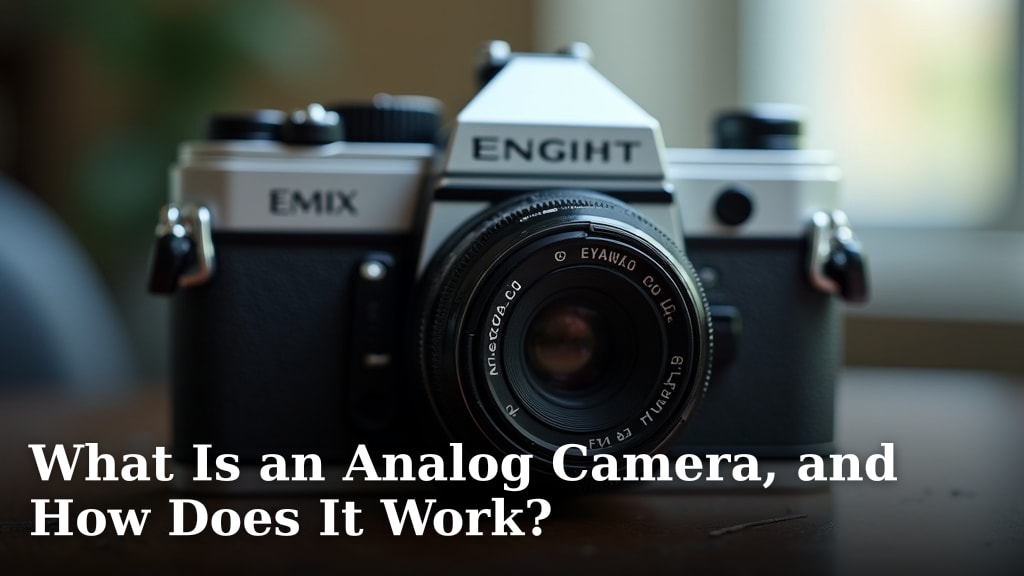
What Is an Analog Camera, and How Does It Work?
An analog camera is a device that uses film to capture photos, not a digital sensor. It works by letting light hit a light-sensitive film, creating a chemical reaction that records the image. This is the original way photography was done for over a century.
Unlike your phone, an analog camera relies on physical film and mechanical parts. We found that the process involves manual controls for focus and exposure. Many people love it for its unique, tangible feel and the look of film photos.
- An analog camera captures images on photographic film.
- It uses a chemical process to develop pictures.
- You must manually adjust settings like aperture and shutter speed.
- Photos are not visible until the film is developed.
- It offers a hands-on, classic photography experience.
Let’s walk through exactly how this classic technology works step by step. We’ll explain the parts, the process, and why you might want to try one.
Understanding the Analog Camera: How Film Captures Images
An analog camera is a mechanical tool designed to record light onto a roll of photographic film. It is a physical system of lenses, shutters, and gears. You operate it with your hands, making choices about what to include in your picture.
Unlike a digital camera, there is no screen to preview your shot. You won’t see the result until the film is chemically developed. Many photographers find this delay part of the fun. It teaches patience and makes you think carefully about each frame.
The Key Parts Inside Your Camera Body
Let’s peek inside the box. An analog camera has several critical components working together. They are mostly simple, which is why these cameras can last for decades.
- Lens: This glass assembly gathers and focuses light onto the film.
- Shutter: A mechanical curtain that opens and closes for a precise amount of time.
- Aperture: A set of blades inside the lens that create a hole. It controls how much light passes through.
- Film Advance: A lever or wheel that moves the film forward to the next unexposed frame.
- Viewfinder: An eyepiece that lets you see through the lens to compose your photo.
The Shutter and Aperture: Your Main Exposure Controls
You control exposure with two primary settings. Getting them right is the core skill of film photography. It’s a balance, like adjusting the volume and bass on a stereo.
Shutter Speed: Freezing or Blurring Time
This setting determines how long the film is exposed to light. A fast shutter speed, like 1/1000th of a second, freezes a moving subject. A slow speed, like 1/30th, can create artistic motion blur. We found that a tripod is essential for shutter speeds slower than 1/60th.
Aperture (f-stop): Controlling Light and Focus
The aperture is the size of the lens opening. A low f-number (like f/2.8) means a wide-open hole. This lets in a lot of light and creates a shallow depth of field. A high f-number (like f/16) is a small hole. It lets in less light but keeps more of the scene in focus from front to back.
The Step-by-Step Process: From Shutter Click to Final Print
Using an analog camera follows a clear sequence. There is a satisfying physicality to each step. Here’s what happens from the moment you raise the camera to your eye.
- Load the Film: You open the camera back and secure a fresh roll of film.
- Compose and Focus: You look through the viewfinder, turn the focus ring, and frame your shot.
- Set Exposure: You choose your shutter speed and aperture based on the light.
- Take the Photo: You press the shutter button. The curtain opens and closes in a blink.
- Advance the Film: You use the lever to wind the exposed film onto a take-up spool.
- Unload and Develop: When the roll is finished, you remove it and send it to a lab or develop it yourself.
How Light Creates an Image on Film
The magic happens at the molecular level. Photographic film is coated with silver halide crystals. When light strikes these crystals, it triggers a chemical change. This creates a “latent image” on the film strip. It is completely invisible to the naked eye at this stage.
According to the Kodak Alaris technical archives, this latent image is a physical change in the crystal structure. It is only revealed later during the chemical development process. It’s like writing a secret message with invisible ink.
Developing the Film: Revealing the Hidden Picture
Developing is a precise chemistry project. You can send your film to a professional lab, or you can do it at home with the right equipment. The process uses a series of chemical baths.
The main steps are: developer (which makes the image visible), stop bath (which halts the developer), and fixer (which makes the image permanent and light-safe). After a final wash, you hang the negatives to dry. You’ve now created your negatives, which are like the “blueprints” for your photos.
Analog vs. Digital: A Clear Comparison
Wondering how this old-school tech stacks up against the modern stuff? Here is a direct comparison of their core characteristics.
| Feature | Analog (Film) Camera | Digital Camera |
|---|---|---|
| Image Capture | Chemical reaction on light-sensitive film. | Electronic signal on a digital sensor. |
| Image Storage | Physical negatives or slides. | Memory card (SD, CF, etc.). |
| Preview | None. Results are seen after development. | LCD screen or electronic viewfinder. |
| Shots per Roll | Limited (e.g., 24 or 36 exposures). | Limited only by memory card size. |
| Primary Controls | Manual settings (shutter, aperture, focus). | Automatic modes and manual controls. |
| Power Source | Often none (fully mechanical). Some need a battery for light metering. | Rechargeable battery required. |
Why People Still Choose Film in a Digital World
It might seem strange to choose a slower, more expensive method. However, we found several compelling reasons why film endures. It’s not just about nostalgia.
- The Quality of Film Look: Many people love the color rendition, grain, and dynamic range of specific film stocks. It has a distinctive aesthetic that is hard to perfectly replicate.
- A More Deliberate Process: With only 24 or 36 shots, you think more about composition. You are less likely to just spray and pray. This can make you a better photographer.
- Reliability and Simplicity: A good mechanical film camera has fewer points of failure. No software glitches. No battery drain mid-shoot. It just works.
- The Tangible Reward: Holding a physical negative or a developed print provides a unique sense of accomplishment. It feels more real than a file on a screen.
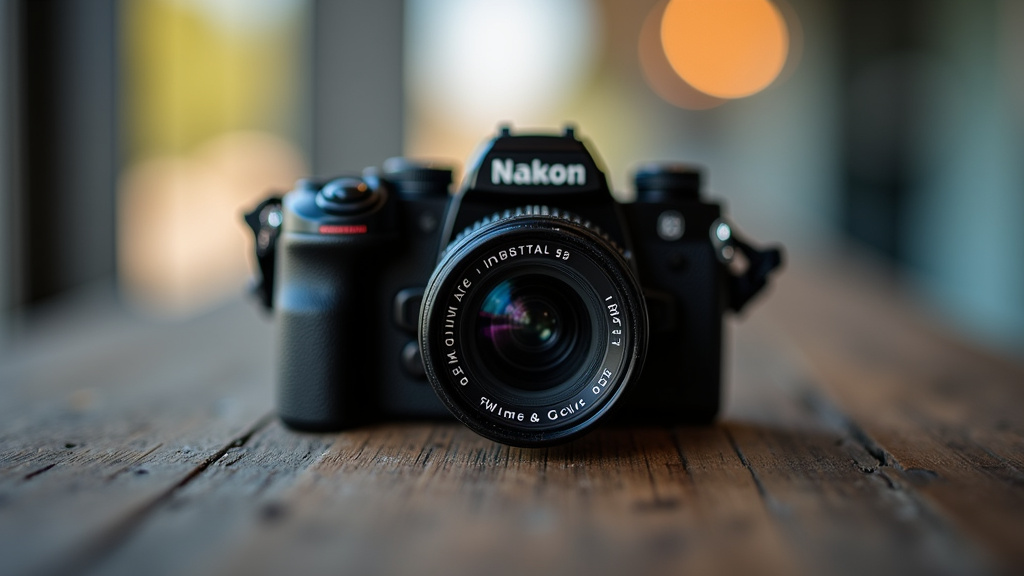
Getting Started: Choosing Your First Film Camera
Ready to try it yourself? You don’t need to spend a fortune. There are excellent, affordable cameras on the used market. We recommend starting with something simple and reliable.
Types of Analog Cameras to Consider
- 35mm SLR (Single-Lens Reflex): These are the classic workhorses. You see directly through the taking lens. Models like the Canon AE-1 or Pentax K1000 are legendary for a reason. They are great for learning.
- 35mm Rangefinder: These are often quieter and more compact. They use a different focusing system. They are favorites for street photography.
- Point-and-Shoot 35mm: Perfect for casual use. They have automatic focus and exposure. You just load film and point. Great for parties and travel.
A Quick Checklist for Your First Film Purchase
Before you buy, run through this short list. It will help you avoid common beginner pitfalls.
- Check the Shutter: Fire it at all speeds. Listen for a consistent sound. It should not be sluggish or sticky.
- Inspect the Lens: Look for haze, fungus (looks like spider webs), or deep scratches. Minor dust is okay.
- Test the Light Meter (if battery-powered): See if the needle moves or the LEDs light up when you press the battery check.
- Look for Bellows Damage: If it’s an older folding camera or some SLRs, check the leather bellows for pinholes of light.
- Ask About Recent Service: A camera that was recently cleaned and lubricated is a safer bet.
Your First Roll of Film: Practical Tips
You’ve got your camera. Now, load a roll and start shooting. Don’t stress about perfection. This is about the experience.
Start with a versatile, forgiving film like Kodak Gold 200 or Fujifilm Superia 400. These are daylight-balanced films. They produce pleasant colors in good light. We found that ISO 200 or 400 films are ideal for learning. They are not too slow for everyday use.
Remember, you have a limited number of frames. Use them wisely. Ask yourself: “Is this light interesting? Is my composition strong?” Take your time. The rhythm of film photography is slower, and that’s okay. Enjoy the process of seeing the world through a different lens.
Conclusion
An analog camera uses film and a simple chemical process to capture photos. It offers a hands-on, reliable experience that many find rewarding. The manual controls and deliberate pace can make you a more thoughtful photographer. The unique look of film is still sought after today. If you’re curious, the best way to understand it is to try it yourself. Find a reputable used camera dealer or a local camera shop. Pick up a basic 35mm SLR and one roll of color film. Your first roll won’t be perfect, and that’s the point. You’ll learn by doing and connect with photography in a new way.
Frequently Asked Questions
Is analog photography more expensive than digital?
It can be, over time. The camera itself may cost less than a new digital model. However, you have ongoing costs for film rolls and development. We found that the price per photo is higher, which encourages you to shoot more intentionally.
What kind of film should I start with?
Start with a standard color negative film. Something like Kodak Gold 200 or Fujifilm Superia 400 is ideal. These films are widely available, forgiving of exposure mistakes, and work well in daylight. They provide a great foundation for learning.
Can I develop film at home?
Yes, but it requires specific equipment and chemicals. You need a light-tight developing tank, reels, and the correct chemistry for your film type. Most beginners start by sending their film to a lab to learn what good results look like first.
How long do analog camera photos last?
Properly stored negatives can last for generations. The physical film is the original master. Digital files can be lost to corruption or format obsolescence. We recommend storing developed negatives in archival sleeves in a cool, dry place.
Do all analog cameras need batteries?
Many do not. Fully mechanical cameras like the Pentax K1000 operate without any power. Other models with a built-in light meter require a battery to power that meter only. The shutter and aperture controls remain mechanical.